• Karachi gets five CNS courts
• One each created for Hyderabad, Sukkur, Larkana, Mirpurkhas and Benazirabad
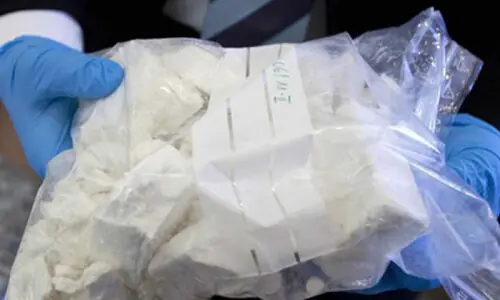
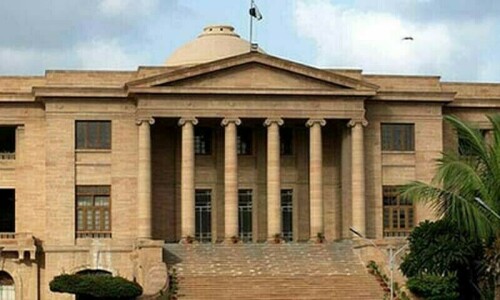
KARACHI: The Sindh High Court (SHC) has abolished 10 anti-terrorism courts (ATCs) in the province and converted them into anti-narcotics courts to decide an alarmingly high number of drug cases.
In September 2024, the provincial assembly passed the Sindh Control of Narcotics Substance (CNS) Act by repealing the federal law (CNS Act of 1997) to the extent of the province.
In May this year, the SHC directed the provincial government to immediately establish special CNS courts across the province after it was informed that the special courts to try such offences under the 2024 law had not yet been established despite having exclusive jurisdiction to try such offences.
In July, the home department approached the SHC for the re-designation of ATCs into CNS courts.
The SHC has abolished 10 ATCs, including eight in Karachi and one each in Hyderabad and Sukkur, and re-designated them in a manner that created five CNS courts for Karachi division and one CNS court each for the five divisional headquarters.
According to a communication made to the secretary of the home department on behalf of the SHC registrar, the department, through the registrar ATCs had sent a letter to the SHC on the subject matter.
“The honorable chief justice has been pleased to accord conditional concurrence, for time being, to abolition of 10 antiterrorism courts (eight in Karachi, one in Hyderabad and Sukkur each) and re-designation in the following manner, and creation of 5 CNS courts for Karachi and 1 CNS court for each divisional headquarter i.e. Hyderabad, Mirpurkhas, Sukkur, Shaheed Benazirabad and Larkana”, it added.
The letter also stated that ATC-I, II, III, VI, VII, IX, X and XIV in Karachi, ATC-III in Hyderabad and ATC-II located at Central Prison in Sukkur had been abolished and re-designated as provincial CNS courts.
After such conversion, the provincial metropolis will have 12 ATCs, whereas two in Hyderabad and one in Sukkur. Eight of the 10 ATCs in Karachi converted into CNS courts had long remained vacant.
Initially, three ATCs were set up in Karachi after the enactment of the Anti-Terrorism Act, 1997, and two more ATCs were later established in the provincial metropolis. Subsequently, ATC-IV and V were shifted to Larkana and Badin.
In 2014, seven new ATCs were set up in the city, and 10 more were established during the Karachi operation in 2016.
SHC moved for recovery of two ‘missing’ MQM-L leaders
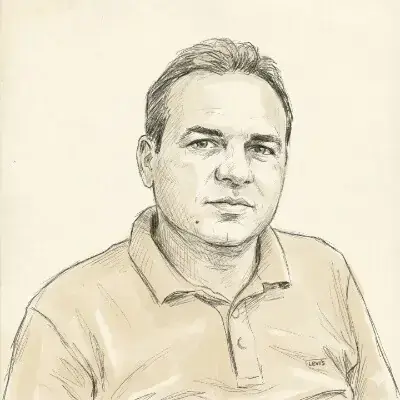
The Sindh High Court was moved on Wednesday for recovery of two Muttahida Qaumi Movement-London leaders, including a former lawmaker, who have reportedly gone missing.
Citing the ministry of interior, director general of Rangers Sindh, provincial police chief and others as respondents, petitioner Hassan Nisar contended that his father Nisar Panhwar along with his friend Anwar Tareen had been picked up on Sept 16 by the law enforcement agencies and since then their whereabouts were unknown.
He asserted that his father had been a victim of enforced disappearances on multiple occasions by law enforcement agencies and it was the fourth such incident highlighting a pattern of illegal abductions targeting political dissidents.
The petitioner further maintained that Mr Panhwar had served as a Member of the National Assembly from 2003 to 2007 and Provincial Assembly of Sindh from 2008 to 2013.
He argued that his father was an elderly individual and was known to be suffering from diabetes, which required consistent and specialised care while the petitioner had approached the police to locate the whereabouts of his father, but to no avail.
He asked the SHC to direct the respondents to make sincere efforts in order to trace the whereabouts of both missing persons.
Published in Dawn, September 18th, 2025