Israeli annexation in West Bank is ‘red line’, warns UAE

• 24 Palestinians killed as military pushes further into Gaza City
• UN Committee on the Rights of Persons says 21,000 children disabled in the conflict
DUBAI: The United Arab Emirates warned Israel on Wednesday that annexation in the occupied West Bank would be a “red line” that would severely undermine the Abraham Accords that normalised relations between the two countries.
The comments came as US President Donald Trump, who first brokered the accords, seeks to expand them in his current term, though efforts have stalled amid growing international criticism of Israel’s conduct in the war.
The warning followed an announcement in August by Israeli far-right Finance Minister Bezalel Smotrich that work would start on a long-delayed settlement intended to divide the West Bank and cut it off from East Jerusalem. Smotrich has also called for annexing the West Bank.
“From the very beginning, we viewed the Accords as a way to enable our continued support for the Palestinian people and their legitimate aspiration for an independent state,” United Arab Emirates’s Assistant Minister for Political Affairs and Envoy of the Minister of Foreign Affairs Lana Nusseibeh told Reuters. “We call on the Israeli government to suspend these [settlement] plans.”
Ms Nusseibeh added that annexation “would constitute a red line for the United Arab Emirates,” as it would undermine the “vision and spirit” of the accords and end the pursuit of regional integration.
The Israeli prime minister’s office did not immediately respond to a request for comment. However, on Wednesday, Smotrich said maps were being drawn up for annexing territory, though it was unclear if he had Prime Minister Benjamin Netanyahu’s support.
Gaza offensive
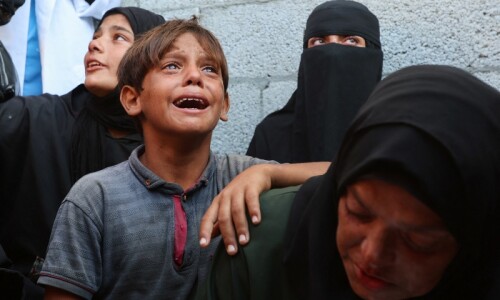
The diplomatic friction comes as the Israeli military pushed deeper into Gaza City, with soldiers and tanks entering Sheikh Radwan, one of the urban center’s most crowded neighbourhoods.
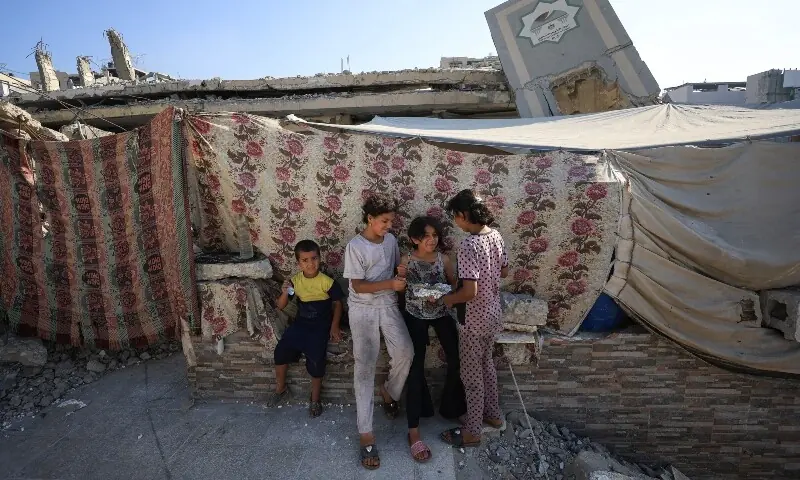
Residents said the military destroyed homes and tent encampments that housed Palestinians displaced by the war.
According to local health officials, at least 24 Palestinians, including children, were killed across Gaza, most of them in Gaza City, on Wednesday.
“Sheikh Radwan is being burnt upside-down.
The occupation destroyed houses, burnt tents, and drones played audio messages ordering people to leave the area,” said Zakeya Sami, 60.
“If the takeover of Gaza City isn’t stopped, we might die, and we are not going to forgive anyone who stands and watches,” she told Reuters.
Witnesses said the military also dropped grenades on three schools in the Sheikh Radwan area sheltering displaced families and bombed a medical clinic, destroying two ambulances.
Netanyahu has ordered the military to take the city, which he describes as the last stronghold of Hamas.
In Israel, public sentiment has increasingly favoured ending the war in a deal to release the remaining prisoners.
In Jerusalem on Wednesday, protesters climbed the roof of Israel’s national library, displaying a banner that read, “You have abandoned and also killed.”
Children disabled
The war’s devastating toll on civilians was highlighted in a United Nations report Wednesday, which found that at least 21,000 children in Gaza have been disabled since the conflict began.
The UN Committee on the Rights of Persons with Disabilities said that of the 40,500 children who have suffered new war-related injuries, more than half have been left disabled.
The committee reported that Israeli evacuation orders were “often inaccessible” to people with hearing or visual impairments. Committee member Muhannad Al-Azzeh cited the example of a deaf mother in Rafah killed with her children, unaware of evacuation instructions.
Restrictions on humanitarian aid have disproportionately affected people with disabilities, who face severe disruptions to assistance, leaving many without food, water, or sanitation.
The committee noted that 83 per cent of disabled people have lost assistive devices like wheelchairs and walkers, which Israeli authorities often consider “dual-use items” and exclude from aid shipments.
“We can’t expect children with disabilities… to be able to run and go to the (aid) points,” Mr Azzeh said. “This is why one of our main recommendations is that children with disabilities must be reached out to.”
Published in Dawn, September 4th, 2025