Turkmenistan’s methane-spewing ‘Gateway to Hell’ loses its spark


 0
0
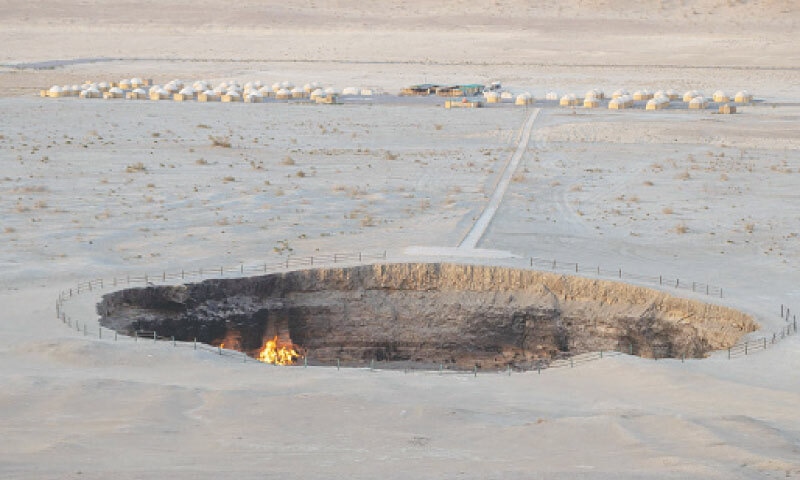

DARVAZA: People go to the “Gateway to Hell” gas crater in the middle of the Turkmenistan desert expecting an angry cauldron but are now coming away unimpressed.
Once a giant uncontrollable pit of red flames and glowing red embers, the 70-metre (230 feet) wide hole is now just a charred cauldron with only a few pockets of small fires.
After letting it burn for 50 years, authorities in the reclusive Central Asian state have finally moved to put out the fire, which spews huge quantities of methane into the atmosphere.
“I’m a little disappointed,” said Irina, 35, who travelled five hours north from the capital Ashgabat to get to see what she thought would be an inferno in the Karakum desert. “On the internet we saw impressive pictures of burning flames. Now we realise they were old photos and videos. The reality is different,” she said. Reducing the fire is an important step for Turkmenistan’s climate ambitions.
The world’s biggest methane emitter through gas leaks, according to the International Energy Agency, it has committed to cutting greenhouse gas emissions. But putting out the fire means killing off the Darvaza gas crater as the country’s top tourist attraction. Several nearby wells have been drilled to reduce the flow of gas.
“Whereas before a huge glow from the blaze was visible from several kilometres away, hence the name ‘Gateway to Hell’, today only a faint source of combustion remains,” Irina Luryeva, a director at state-owned energy company Turkmengaz, told a conference in June.
The road from Ashgabat to the crater is covered with cracks and potholes, making the journey for would-be tourists treacherous.
Published in Dawn, August 7th, 2025