Shrinkflation trims grocery baskets of Singaporeans
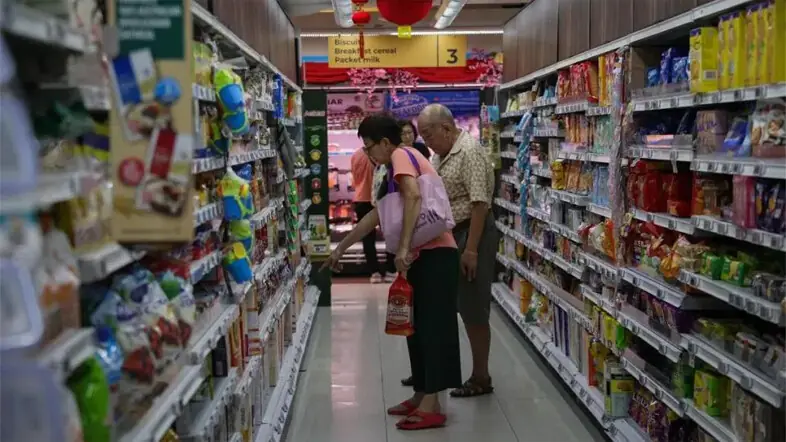

Shoppers in Singapore may be paying the same — or more — for less when it comes to items such as instant coffee or tea, as well as cereal and juices, according to the Department of Statistics.
This is known as “shrinkflation”. It occurs when a product’s size or quantity is reduced, but the price stays the same or increases, so consumers effectively pay more per unit. This practice results in hidden price changes. A common form of shrinkflation is when the product’s price remains the same but the quantity is reduced.
Take a 1-litre bottle of shampoo priced at $8. If the manufacturer reduces the bottle size to 0.8 litre but keeps the price at $8, that same bottle of shampoo will now cost $10 per litre. This is an increase of 25 per cent in the unit price, even though the price tag did not change.
Another form of shrinkflation is where the price goes up and the quantity of the product is reduced. Again, take a 1-litre bottle of shampoo that costs $8. But this time, the manufacturer cuts the bottle size to 0.8 litre and raises the price to $10. The shampoo now costs $10 for 0.8 litre or $12.50 per litre. Compared with the original $8 per litre, this would be a 56pc increase.
Singapore University of Social Sciences economist Walter Theseira said shrinkflation will show up in products where there is no concept of a standard quantity or size.
For example, manufacturers can get away with reducing package sizes of a packet of biscuits or a tub of ice cream because “there is no common agreement on what unit it needs to be sold in, 500g versus 450g”, he said.
However, they will not be able to shrinkflate a pack of rice because people expect to buy a 1kg or 5kg pack of rice, he added. “The fundamental purpose is to disguise price increases,” Associate Professor Theseira noted.
He added that there are other ways that manufacturers try to hide price increases, such as by offering consumers a lower-quality product. “For many chocolate products, there has been a reduction in the cocoa content,” he said, adding that “cocoa is the expensive ingredient”.
“The idea is to substitute the expensive component with cheaper ingredients,” Prof Theseira noted. SingStat’s analysis highlighted another example where manufacturers change their packaging to offer more of a product and raise the price at the same time.
Published in Dawn, May 4th, 2026