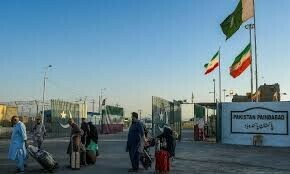
KARACHI: Highlighting the financial losses, the Majlis Wahdat-i-Muslimeen (MWM) has demanded immediate withdrawal of the ban imposed by the federal government on land travel of Pakistani pilgrims to Iraq for Arbaeen.
In a joint press conference held at Wahdat House on Tuesday, MWM Sindh president Allama Baqar Abbas Zaidi, alongside other party leaders and representatives of the Sindh Pilgrims Association and Ziyarat travel operators, criticised the move as unacceptable.
“All over the world, millions of devotees travel to Iraq for Arbaeen. Thousands from across Pakistan, especially Sindh, have made their travel arrangements. Who will compensate for the billions of rupees already spent by Zaireen on visas, transport, and other preparations?” Allama Zaidi asked.
Allama Ali Anwar, representative of the Sindh Pilgrims Association, added that over 138,000 passports of pilgrims had been submitted at the Iranian Consulate, awaiting visa issuance.
“If the land route ban continues, losses may exceed Rs4 billion, just in terms of visa and ticket costs — not to mention the additional damages from logistical arrangements already made,” he said.
He also criticised the “exorbitant” fares charged by the national airline, labelling them “exploitative”.
“Instead of facilitating travel of the pilgrims, the government has burdened them further with increased taxes, visa fees, and inflated airfare,” he said. The MWM leaders warned that if the ban was not lifted immediately, nationwide protests would begin soon, starting in various districts of Sindh.
“If the government continues to ignore the demands, sit-ins and long-term protests will follow.”
The leaders highlighted, what they described as contradictions in the federal interior minister’s statements regarding security threats in Balochistan.
“On one hand, the minister claims that terrorists are under control, yet on the other, he cites security concerns as a reason to block land routes. This inconsistency raises questions about the government’s intentions and credibility,” said the MWM leader.
The leaders also claimed that by restricting pilgrims, the government was unintentionally strengthening the narratives of hostile nations like India and Israel, who have already expressed concerns about the region’s instability.
“If the situation is truly so grave, why hasn’t a full-scale security operation been launched in Balochistan?” said Allama Zaidi.
The MWM leaders stated that the government had made promises during the recent Iran-Iraq-Pakistan trilateral Arbaeen summit, which now seems to be nothing more than empty words.
“Just as in previous years, millions of Pakistani devotees plan to participate in Arbaeen processions in Iraq. Thousands of caravans from Sindh have completed their preparations. Several Shia organisations have arranged temporary facilities for pilgrims at border points, including food, rest areas, and medical services. The government must fulfil its promise and ensure safety of all pilgrims,” said Allama Anwar.
Protest in Nawabshah
Meanwhile, the Shia Ulema Council and Sindh Pilgrims Welfare Organisation held a protest demonstration outside the Nawabshah Press Club on Tuesday against the government’s decision to impose a ban on pilgrims traveling to Iran and Iraq by road.
The protest was led by Shia Ulema Council’s Provincial Deputy General Secretary Muhammad Hussain Chandio, Maulana Kifayat Hussain Kareemi, and Qalb Mehdi.
They said that it was unacceptable to deny pilgrims their right to visit sacred sites, citing security concerns.
Published in Dawn, July 30th, 2025