US bunker busters make their combat debut


WASHINGTON: A powerful bunker-busting bomb was used in combat for the first time when US struck Iranian nuclear sites this weekend.
Israel had carried out a week of air strikes on Iran, but does not possess the GBU-57 — a 13,600kg weapon viewed as necessary to reach the most deeply buried facilities — or the aircraft needed to deploy it.
General Dan Caine, the top US military officer, told journalists on Sunday that US forces dropped 14 of the bombs in the massive operation aimed at knocking out Tehran’s nuclear programme.
Capabilities
The US military says the GBU-57 — also named Massive Ordnance Penetrator — is designed to penetrate up to 200 feet (60 meters) underground before exploding.
This differs from missiles or bombs that typically detonate their payload near or on impact.
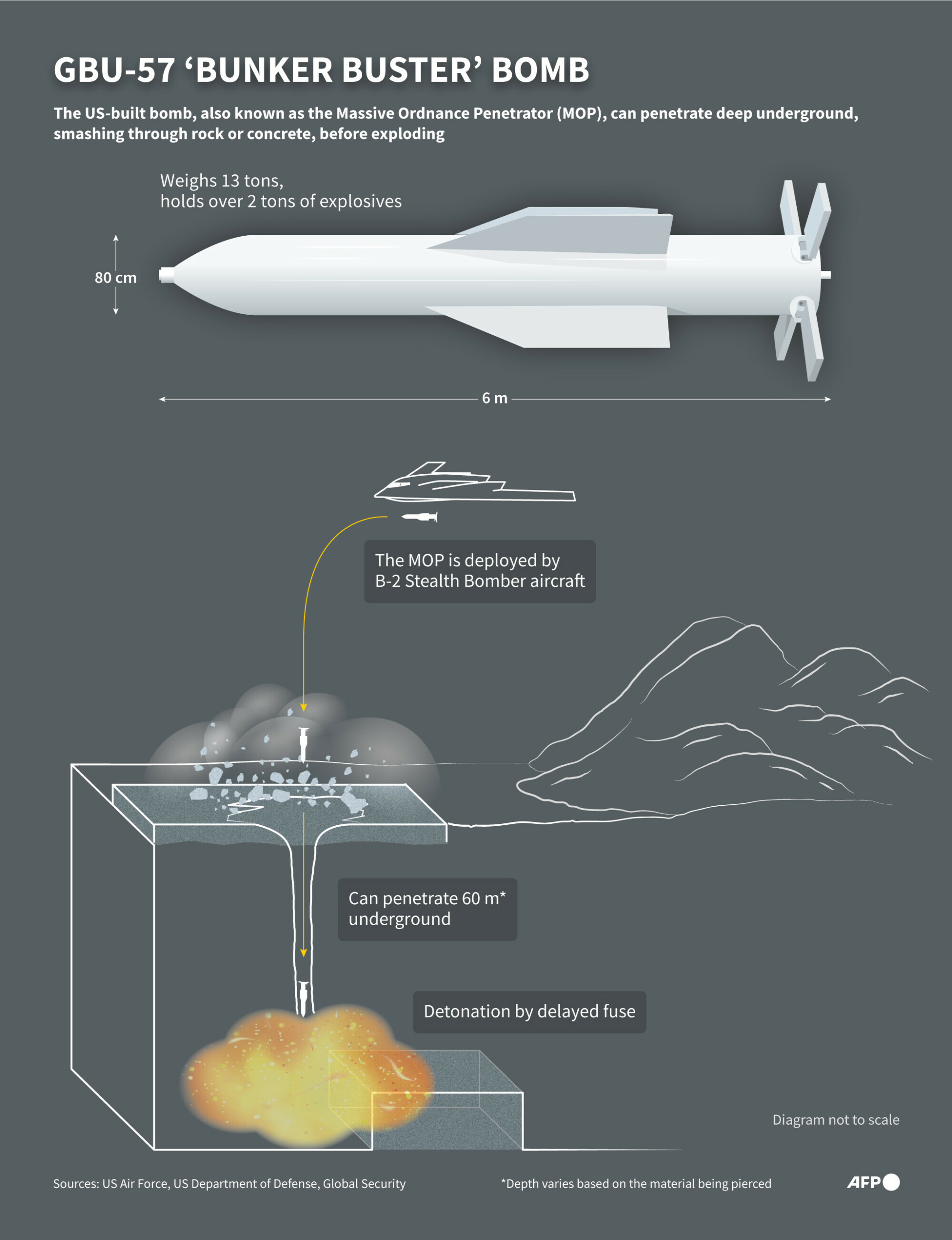
“To defeat these deeply buried targets, these weapons need to be designed with rather thick casings of steel, hardened steel, to sort of punch through these layers of rock,” said Masao Dahlgren, of the Centre for Strategic and International Studies (CSIS), a Washington-based research centre.
The 6.6-meter-long GBU-57 also has a specialized fuse as “you need an explosive that’s not going to immediately explode under that much shock and pressure,” Dahlgren said.
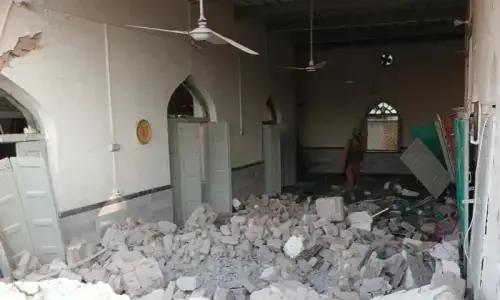
Caine said Sunday it was too early to comment on what remains of Iran’s nuclear program, but that “initial battle damage assessments indicate that all three sites sustained extremely severe damage and destruction.”
Deployment
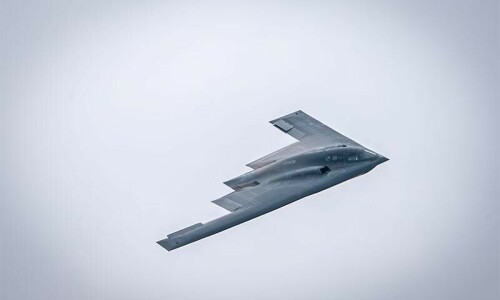
The only aircraft capable of deploying the GBU-57 is the B-2 Spirit, a stealth bomber.
With their long-range capabilities, B-2s departing from the United States “are able to fly all the way to the Middle East to do bombing runs. That’s been done before,” Dahlgren said.
The US employed seven B-2s in the Iran strikes — aircraft that can fly 9,600km without refuelling and which are designed to “penetrate an enemy’s most sophisticated defences and threaten its most valued, and heavily defended, targets,” according to the US military.
“This was the largest B-2 operational strike in US history and the second-longest B-2 mission ever flown,” Caine said.
Several B-2s proceeded west over the Pacific as a decoy while the bombers that would take part in the strikes headed east — a “deception effort known only to an extremely small number of planners and key leaders,” the general said.
Imagery
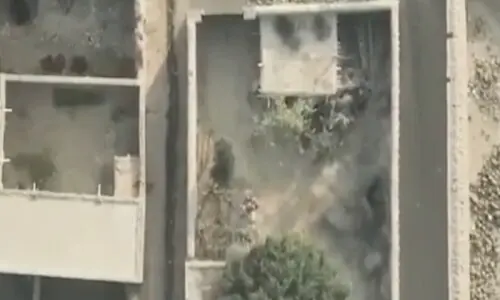
Senior imagery analyst at McKenzie Intelligence Services, Stu Ray, told BBC Verify: “You will not see a huge blast effect at the entry point as it is not designed to detonate on entry but deeper down into the facility.”
He added that it looks like three separate munitions were dropped on two separate impact points, and that the grey colouration on the ground appears to show concrete debris blown out by the explosions./
Published in Dawn, June 23rd, 2025