0
0

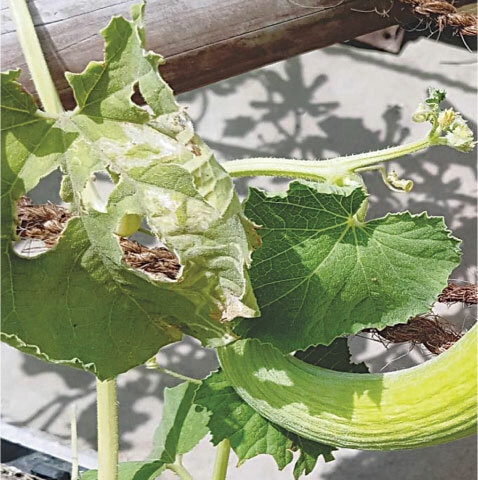
The Armenian cucumber vine, which has both male and female flowers growing on it, depends on natural pollinators to transfer pollen, pollinate and eventually fertilise its female flowers to produce a healthy fruit. At the same time, its bright and attractive yellow flowers and the plant itself also attract many unwanted critters, pests and diseases during this process.
This requires gardeners and growers to be vigilant of any signs of threat to the Armenian cucumber, locally known as kakrri, from the seedling phase all the way to the flowering and fruiting stage of the plant.
Pests and birds usually attack the plant at the seedling stage. It is already a critical time, as the plant has very few leaves. One solution is to covering the growing container with a green net. Erecting and installing light-deflecting CDs or a scarecrow may also scare the birds.
The seedlings are also vulnerable to slugs and insects. Once the seedling grows to the next stage and beyond, the chances of bird attacks diminish significantly. In a mature, fully grown Armenian cucumber vine, the loss would be insignificant even if a bird feeds on one or two leaves, with dozens growing on the vine.
The Armenian cucumber plant faces many challenges, from fungal infections to yellowing leaves and attracting pollinators and pests in equal measure…
The Armenian cucumber vines are also visited by a number of pests. These include, but are not limited to, leaf miners, aphids, cucumber beetles, squash bugs, cotton stainer bugs, spider mites and white flies. These pests primarily attack the leaves or their undersides and damage them extensively. Usually, the pests are manually removed with hands and the infected leaves pruned off.
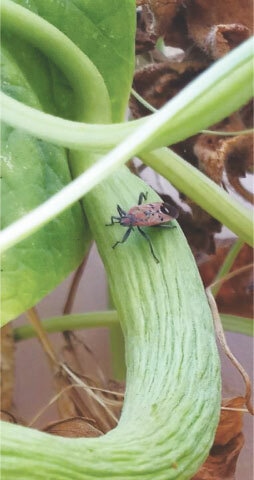
Afterwards, any organic pesticide can be sprayed on both sides of the leaves. The plant is continually sprayed till all the pests disappear. Sometimes, the leaves of the Armenian cucumber start to turn yellow. This can be due multiple reasons, including issues with the watering schedule and sunlight exposure, pest attack or any fungal infections, but more commonly due to nitrogen deficiency. After identifying the root cause, the potential remedy should be applied to save as many leaves as possible.
Sometimes, due to cramping of the vine and cluttering of the leaves, fungal infections may occur. In such cases, it is important to not only remove the infected leaves, but also improve aeration of the plant. A fungicide might be required in case of a strong fungal attack.
Growing the vine on a trellis and ensuring proper spacing between plants helps the plant to grow freely and can go a long way in the prevention of many issues. With the reduction of leaves coming in contact with each other, the possibility of fungal infections also diminishes significantly. One should also not water the infected leaves directly. This may spread the infection further. The trick is to water the plant directly on the soil surface or near the base of the plant.

Fungal diseases which may impact the vine include powdery mildew, leaf blight and anthracnose. These may manifest as wilting of leaves, powdery deposits on the leaves and stalk, spots on different parts of the plant and early deterioration issues in the harvest.
The kakrri fruit may start to turn bitter if it is left on the vine and not harvested at the right time. Many believe that bitterness also occurs when the vine faces unwanted stresses, such as irregular watering schedules, drought like conditions, fluctuating temperatures and soil deficiencies. If these issues are dealt with, the possibility of a bitter kakrri growing on the vine is negligible. The plant seldom suffers from deficiency otherwise. Moreover, the plant has only a small requirement of mild, balanced fertilisers throughout its life cycle.
This sums up the most critical threats to the Armenian cucumber vine in the different phases of its life cycle. The relevant fruiting phase techniques, along with the harvesting and nutritional content of this healthy essential vegetable will be discussed in next week’s column.
Please send your queries and emails to doctree101@hotmail.com. The writer is a physician and a host for the YouTube channel ‘DocTree Gardening’ promoting organic kitchen gardening
Published in Dawn, EOS, June 15th, 2025