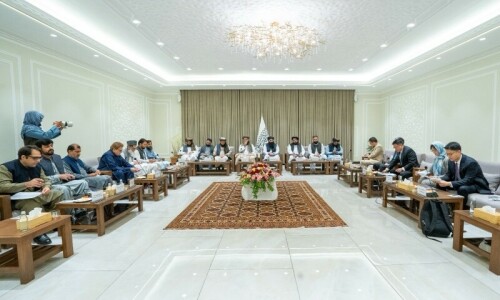
THE Pakistani and Chinese special envoys for Afghanistan were in Kabul on Sunday meeting various key ministers in the Afghan Taliban set-up under the banner of the trilateral dialogue mechanism linking the three neighbouring states.
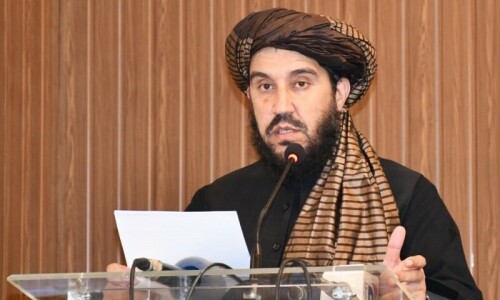
Such meet-ups are important for regional integration and security, and send the message that states in the region should cooperate and solve their problems themselves. Islamabad and Beijing’s envoys met the Afghan Taliban’s interior, foreign and commerce ministers, with regard to the main issues that concern all three states: security and trade. Afghan Interior Minister Sirajuddin Haqqani called for “mutual respect and constructive engagement”, while Pakistan’s envoy Ambassador Mohammad Sadiq said “good neighbourly relations [and] regional stability” were emphasised.
While no foreign state — including Pakistan and China — has recognised the Afghan Taliban regime, many states, especially in the wider region, have maintained diplomatic engagement with Kabul’s rulers, simply because there is no other legitimate entity to talk to in Afghanistan.
As Sunday’s meetings indicated, both Pakistan and China want to carry forward their engagement with the Afghan government. During the fifth round of the Trilateral Foreign Ministers’ Dialogue, which was held in Islamabad in 2023, the need to check the activities of the banned TTP and ETIM was reiterated. Both groups, believed to be active in Afghanistan, threaten Pakistan and China’s security, respectively. Therefore, it is welcome that Islamabad and Beijing jointly conveyed their concerns to Kabul.
On their part, the Afghan Taliban want to engage with China and Pakistan to enhance trade links, and help them break out of their diplomatic isolation. These objectives — security guarantees and increased trade — are interlinked, as commercial activities can only pick up when the region is safe from terrorism.
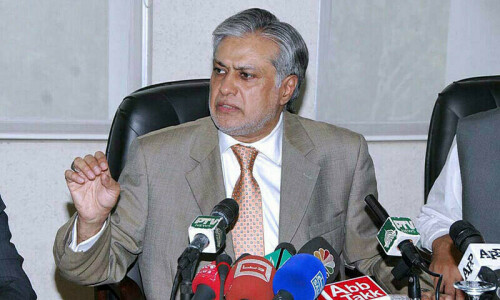
The sixth round of the Foreign Ministers’ Dialogue is due in Kabul. To make this meeting successful, the Taliban authorities should take concrete steps to address Pakistan and China’s security concerns. If terrorist groups continue to find sanctuary in Afghanistan, regional integration and increased trade will be difficult to achieve. Deputy Prime Minister Ishaq Dar was in Kabul last month, and there were indications that the Taliban would respond to Islamabad’s concerns. Pakistan should also address Kabul’s legitimate concerns to benefit all.
The Taliban have a clear choice to make: if they want regional integration and economic revival, they must take verifiable action against malign actors sheltering on their soil and threatening the region. Afghanistan’s integration into the greater Central Asia/ South Asia region would benefit its people through a revived economy. But that can only happen if Kabul enhances trust by putting militant groups out of business.
Published in Dawn, May 13th, 2025