Justice Babar Sattar decides to retain official residence in Islamabad
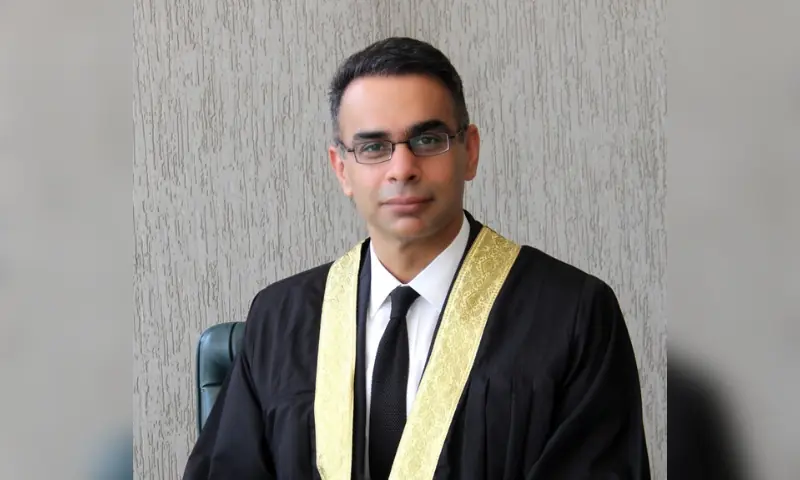
ISLAMABAD: Justice Babar Sattar, who was transferred from the Islamabad High Court (IHC) to the Peshawar High Court (PHC) last month, has decided to continue residing in the federal capital during his tenure at the provincial high court.
Sources in the IHC told Dawn that Justice Sattar has formally conveyed to the court administration that he intends to retain his official residence in Islamabad’s F-6 sector.
According to sources, the judge has written to the IHC administration seeking retention of the accommodation allotted to him.
A senior IHC official explained that under the Presidential Order 1997, a judge is entitled to retain one official residence. Since Justice Sattar is not seeking separate official accommodation in Peshawar, he is eligible to keep the Islamabad residence, the official said.
The judge had been transferred to Peshawar High Court
Sources added that Justice Sattar may stay at the official rest house of the PHC during his service there. Under the applicable rules, a judge residing in a rest house can continue retaining an officially allotted residence elsewhere.
The issue of judicial accommodation has remained contentious due to the absence of a dedicated housing colony for IHC judges. Consequently, the IHC administration has been seeking Category-I residences from the Estate Office for judges posted to the federal capital.
Category-I houses are generally earmarked for BS-22 officers, although BS-21 officers may also retain such accommodation.
Court officials said the IHC administration had initially faced difficulties in obtaining official residences for serving judges because of the limited availability of Category-I houses. However, the situation improved following a landmark judgement authored by Justice Sattar in 2023 regarding judicial housing entitlements.
In that judgement, delivered while dismissing a petition filed by Sumera Nazir Siddiqui, a member of the Anti-Dumping Tribunal, against cancellation of her government residence, Justice Sattar held that judges were entitled to official accommodation from the date of appointment and throughout their service.
He ruled that judges’ entitlement flowed from the Presidential Order rather than the general accommodation rules applicable to federal government servants.
Justice Sattar observed in the judgement that five out of eight serving IHC judges had already been provided official residences, while the remaining judges were awaiting allotment of Category-I houses. He remarked that such disparity “impinges on the independence of the judiciary”.
The judgement further directed the housing ministry to remove judges’ names from the Estate Office’s general allotment list to avoid any perception that judges were dependent on the pool reserved for federal government servants.
Justice Sattar had also ordered the government to expedite the construction of official residences for IHC judges on a six-acre plot allotted by the Capital Development Authority and directed preparation of a PC-I for allocation of funds for the project.
Sources recalled that former IHC chief justice Mohammad Anwar Khan Kasi had retained residences in both Islamabad and Quetta during his tenure, using one of the houses for what officials described as “work from home”.
Published in Dawn, May 27th, 2026