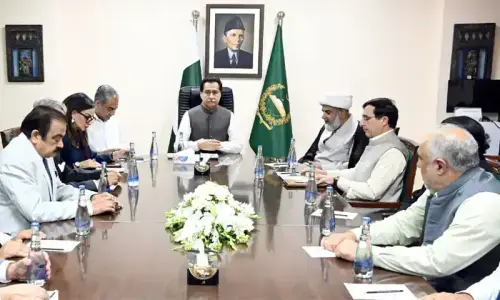
Foreign Office Spokesperson Shafqat Ali Khan on Friday acknowledged that outstanding issues were discussed during the high-level diplomatic engagement with Bangladesh amid reports of the country seeking a formal apology for the events of 1971.
The two countries were once one nation but split following a bloody civil war, which saw the territory previously referred to as ‘East Pakistan’ seceding to form the independent nation of Bangladesh.
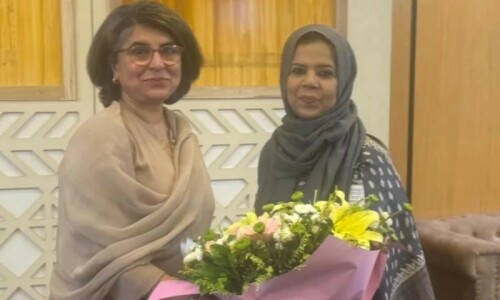
Foreign Secretary Amna Baloch arrived in Dhaka earlier this week for Foreign Office Consultations (FOC) after a 15-year break in diplomatic engagement with Bangladesh.
Following the meeting, international media outlets and Bangladesh’s leading news agencies Daily Star and Dhaka Tribune reported that Bangladesh asked for a formal apology for the controversial events of 1971 and sought compensation among other demands.
The Daily Star — quoting Foreign Secretary Jashim Uddin — said that the compensation included foreign aid, unpaid provident funds, savings instruments, and $200 million given by international donors for the 1970 cyclone. Meanwhile, the Dhaka Tribune quoted him as saying: “These issues need to be resolved to establish a solid foundation for our bilateral relations.”
Questioned about the media reports during his weekly press briefing today, the FO spokesperson said: “Some outstanding issues were indeed discussed during the consultations.
“However, both sides stated their respective positions on them in an environment of mutual understanding and respect.”
Khan said that “fake news or sensational news by forces” were trying to undermine the growing reconciliation between the countries. “The foreign secretary level consultations took place in a very cordial and constructive atmosphere,” Khan asserted.
“The conduct of these consultations after a gap of 15 years is a testimony to the existing goodwill and cordiality between Pakistan and Bangladesh,” he said, adding that such “misleading reports must not undermine the significance of the important development in bilateral relations”.
Asked again about the matter, he reiterated: “Some outstanding issues were indeed discussed during the consultations; however, both sides stated their respective positions on them in an environment of mutual understanding and respect.”
Earlier in his address, he said the talks were held in a cordial atmosphere and “reflected a shared resolve to revitalise bilateral engagement”.
He said the two sides held a “comprehensive exchange” on political, economic, cultural, educational and strategic cooperation that was “underpinned by shared history, cultural affinities and the common aspirations of their peoples”.
The spokesperson said that both sides expressed satisfaction at recent high-level contacts in New York, Cairo, Samoa, and Jeddah, which had helped reenergise the bilateral relationship.
“Both sides emphasised the importance of maintaining momentum through regular institutional dialogue, early finalisation of pending agreements and enhanced cooperation in trade, agriculture, education and connectivity. Pakistan offered academic opportunities in its agricultural universities, while Bangladesh offered technical training in fisheries and maritime studies. The Bangladeshi side also acknowledged scholarship offers from private universities in Pakistan and underscored the need for deeper cooperation in the education sector,” Khan said.
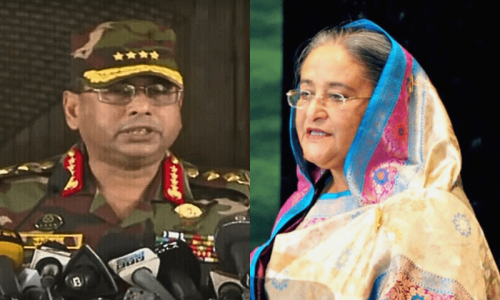
In the years since the split between Pakistan and Bangladesh, Dhaka’s leaders — especially the ousted regime of Sheikh Hasina — stayed firmly in the Indian camp, preferring to maintain close ties with New Delhi and keeping Islamabad at arm’s length.
However, ever since a popular uprising that saw Hasina’s government toppled in August of last year, with the deposed premier fleeing to her old ally India, there has been a thaw in ties between the two capitals, with trade and bilateral relations seeing a marked improvement.
During a meeting with Prime Minister Shehbaz Sharif on the sidelines of the D-8 summit of developing nations in Cairo in December, the interim leader of Bangladesh had expressed the desire to resolve outstanding grievances from Dhaka’s 1971 separation from Islamabad.
“The issues have kept coming again and again. Let’s settle those issues for us to move forward,” the AFP news agency had quoted Dr Muhammad Yunus as telling PM Shehbaz, according to a statement from the former’s office.
In January, the militaries of Pakistan and Bangladesh had stressed the need for the “enduring partnership” between the two countries to “remain resilient against external influences”.