ISLAMABAD: Interior Minister Mohsin Naqvi on Monday formally approved the formation of an intelligence coordination and threat assessment centre under the National Counter Terrorism Authority (Nacta).
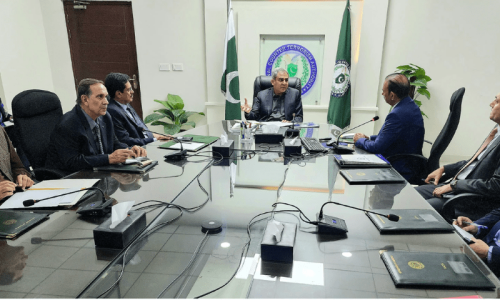
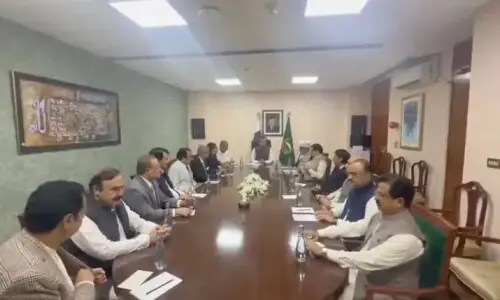
The approval that would effectively mean the reincarnation of the Joint Intelligence Directorate (JID), formed in 2016 under former interior minister Chaudhary Nisar Ali Khan, was accorded during fifth meeting of the board of governors of Nacta here.
The session focused on critical decisions aimed at strengthening Pakistan’s counter-terrorism framework. Nacta’s National Coordinator Khalid Chauhan gave a detailed briefing on the authority’s performance and plans.
One of the most significant outcomes of the meeting was the approval for the establishment of the National Intelligence Fusion and Threat Assessment Centre (Niftac).
The new centre, which was developed after thorough consultations with security stakeholders, will serve as a specialised hub for intelligence coordination and threat analysis.
Niftac’s work to be supplemented by similar centres in provinces
Mr Naqvi underscored that the creation of Niftac was a vital step towards achieving Nacta’s strategic objectives. He said that similar centres called ‘Piftacs’ will be set up in the provincial capitals to bolster regional intelli-gence efforts.
The establishment of Niftac is expected to ensure effective implementation of the National Action Plan (NAP) and address emerging security challenges.
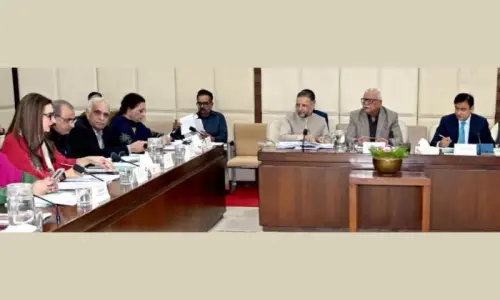
The meeting was also attended by the Minister of State for Interior Tallal Chaudhry, Senators Manzoor Ahmed and Ponjo Mal Bheel, Interior Secretary, Islamabad Chief Commissioner, Home Secretaries from all provinces, and Inspector Generals of Police from Punjab, Sindh, Khyber Pakhtunkhwa, Balochistan, Azad Kashmir, and Gilgit-Baltistan.
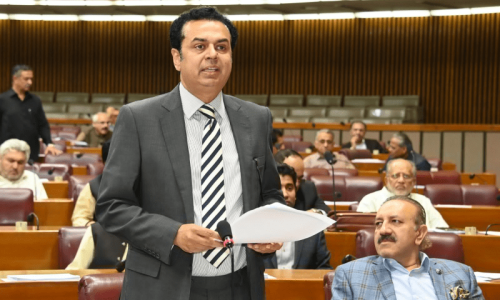
Tallal Chaudhry emphasised that Niftac would enhance Nacta’s operational capacity, making it a more robust institution in the fight against terrorism.
All recommendations presented by Mr Chauhan were unanimously approved by the board of governors. The decisions taken were poised to fortify the internal security apparatus and advance counter-terrorism strategy.
Ahsan for reviving 2018 policy
Separately, chairing the second steering committee meeting on the socio-political domain, following the directives of the Central Apex Committee concerning the revised National Action Plan 2021, Planning Minister Ahsan Iqbal called for revival of the National Internal Security Policy of 2018 to uproot terrorism and extremism from the country.
He recalled that in 2017-18 during PML-N’s previous tenure, National Internal Security Policy (NISP 2018-23) was developed in collaboration with all stakeholders and the approval of civil-military leadership.
“The primary objective of this policy was to build on the success of Operation Zarb-i-Azab by prioritising non-kinetic measures. NISP provided a comprehensive framework that incorporated actions in administrative, social, economic, political and information domains to consolidate peace in the country,” he added.
Unfortunately, the previous government did not implement the NISP (2018) which led to the reversal of gains achieved against terrorism and extremism.
“Resultantly, the policy document resonates with the situation as much today as it did in 2018, and should continue to guide the government,” he added.
The minister further called for increased vigilance within schools to ensure that teachers with extremist inclinations do not influence students.
He advocated for the introduction of a positive curriculum designed to foster national unity and moderation among students.
Published in Dawn, April 8th, 2025