Decision to expel refugees has ‘shaken’ Afghan community in Pakistan: UNHCR
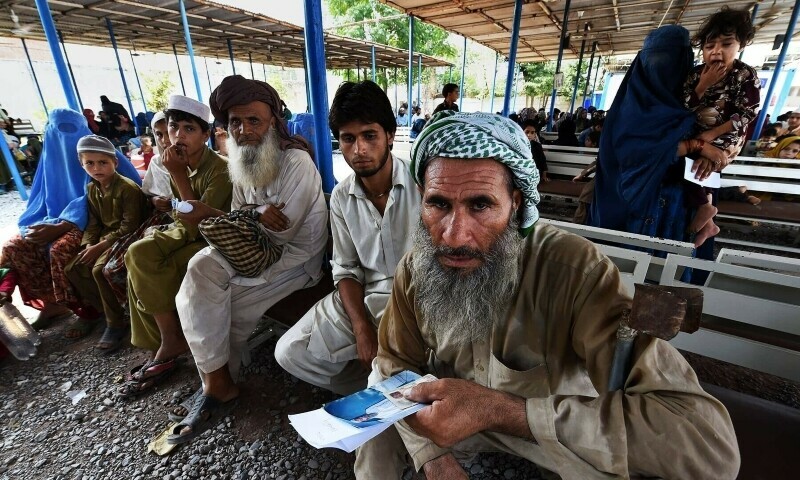


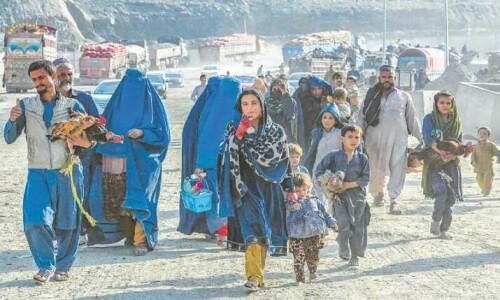
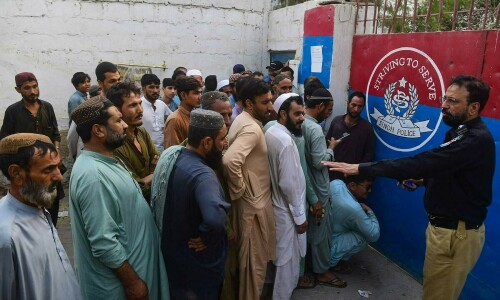
The head of the UN’s refugee agency in Pakistan on Sunday expressed concern as the departure deadline for Afghan Citizenship Card (ACC) holders draws closer, warning that the decision has “shaken” the Afghan community.
As part of the government’s plan to repatriate all illegal foreigners, March 31 was officially set as the deadline for ACC holders to leave Pakistan voluntarily, with a renewed warning by the interior ministry that mass deportations would commence afterwards.
In an Eidul Fitr message, United Nations High Commissioner for Refugees (UNHCR) representative for Pakistan Philippa Candler expressed her concerns as Pakistani officials have ruled out any change in the deadline.
“Pakistan hosts 1.52 million registered Afghan refugees and asylum-seekers, an estimated 800,000 Afghan citizenship holders, along with others living in the country without official recognition,” she said in the message, titled ‘A Call for Compassion: Afghan Refugees in Pakistan and the Path to Hope’.
The UNHCR representative said she visited an Afghan family last week who had sought refuge here in 2022 after fleeing Afghanistan in a hurry, leaving behind everything they knew in search of peace and safety.
“It was heartbreaking to see how fearful they were to be forced to go back. Their hopes and dreams have been shattered.”
Candler added that Afghans who entered Pakistan were part of the workforce, started businesses and contributed to the country.
“Over time, Afghan refugees have become woven into the fabric of Pakistan’s society,” she wrote.
“Despite their contributions to Pakistan, Afghans often face discrimination, limited access to formal employment, and a lack of legal rights that makes their lives insecure and pushes many to the fringes of society.”
The UNHCR representative said the latest directives from the government represented a significant disruption to the fabric of many communities.
“Dislocation from communities that have welcomed them and a possible forced return to Afghanistan, when there has been little chance for planning on how to rebuild their lives there, are unlikely to be sustainable,” Philippa Candler said.
Meanwhile, officials in Khyber district say that temporary camps have been set up at Landi Kotal and also in Peshawar to facilitate refugees’ repatriation.
Also in Afghanistan, the Taliban authorities have made arrangements to welcome refugees at Torkham, Qureshi Badloon, a spokesman for the Nangarhar government told Dawn.com.
Acting Afghan Foreign Minister Amir Khan Muttaqi, in a meeting with Pakistan’s Special Representative for Afghanistan Mohammad Sadiq in Kabul last week, had asked Pakistan to give more time to the ACC holders as repatriation of so many people could create difficulties for his government.
Solutions that work for everyone
In her message, Candler said that the situation required a multifaceted approach.
“Firstly, Pakistan and Afghanistan must work together to make sure that Afghan refugees can voluntarily and safely return home,” she wrote. “Forced returns don’t do anyone any favours, and aren’t sustainable: many of those pushed to return in 2023 are back in Pakistan again.
“Sustainable return means creating a peaceful and secure environment in Afghanistan, so refugees don’t have to fear persecution or discrimination when they go back,” Candler wrote.
The UNHCR representative highlighted that many Afghans have departed to other countries, while thousands still remain in Pakistan. “UNHCR is calling for their speedy departures, which means a durable solution and stability for the refugees,” she wrote.
Candler commended Pakistan’s long-standing hospitality toward Afghan refugees but acknowledged that Pakistan cannot carry this responsibility forever.
“The solution lies in all of us working together — Afghanistan, Pakistan, and the international community — to create a comprehensive approach that addresses both the immediate and long-term needs of Pakistan, Afghanistan, and of the Afghans themselves.”