Israel’s defence minister on Friday threatened Beirut after rocket fire from Lebanon, rattling an already fragile truce that had largely ended more than a year of hostilities with Hezbollah.
“If there is no quiet in Kiryat Shmona and the Galilee communities, there will be no quiet in Beirut either,” said defence chief Israel Katz, referring to the northern towns towards which the rockets were launched.
Israel’s military said in a statement on Friday morning that two “projectiles” were launched from Lebanon towards Israel. One was intercepted, it said, while the other fell in Lebanese territory.
It was the second time rockets were fired from Lebanon since the November ceasefire brought an end to the fighting between Israel and Hezbollah, though Israel has continued to conduct occasional strikes in Lebanon’s south despite the truce.
“The Lebanese government bears direct responsibility for any fire toward the Galilee,” Katz said.

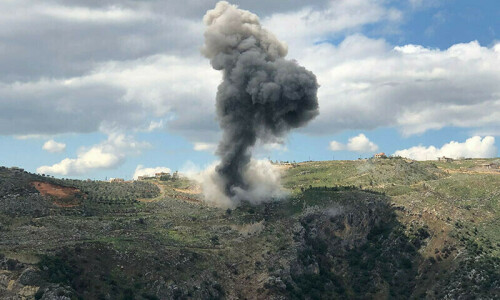
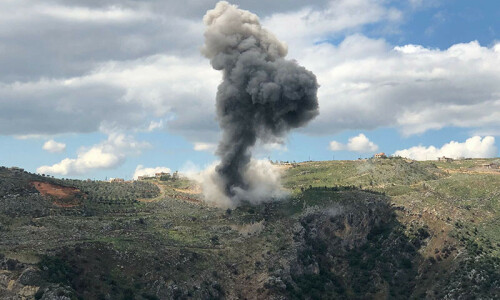
The latest rocket launches came hours after Israeli strikes killed six people in Lebanon’s south, with Israel saying it had targeted Hezbollah operatives.
Lebanon’s National News Agency reported Israeli artillery shelling on the village of Khiam, five kilometres from the Israeli border.
It said the border community of Kfar Kila was also the target of shelling, and that the Israeli army was conducting a search-and-clear operation on Hammamess hill, where sustained gunfire could be heard.
The Lebanese movement Hezbollah began launching rockets at Israel on October 8, 2023, in support of its ally Hamas following the Palestinian group’s unprecedented attack on southern Israel that sparked Israel’s invasion of Gaza, which has killed more than 50,000 Palestinians so far amid accusations of genocide.
The cross-border hostilities ultimately escalated into an all-out invasion, with Israel conducting an intense bombing campaign in Lebanon and sending in ground troops.
The November truce brought a partial Israeli withdrawal, though its troops have continued to hold five positions in south Lebanon that it deems strategic, even after a deadline for pulling out its troops passed.
Escalations
Last weekend saw the most intense escalation since the truce, with Israeli strikes in the south killing eight people, according to Lebanese officials.
The UN peacekeeping force in Lebanon said at the time it was “alarmed by the possible escalation of violence” following rocket fire.
Hezbollah denied any involvement in that rocket attack and called Israel’s accusations “pretexts for its continued attacks on Lebanon”.
Under the terms of the ceasefire, Hezbollah was to pull its forces north of the Litani River, about 30 kilometres (20 miles) from the Israeli border, and dismantle any remaining military infrastructure in the south.
Israel has also recently resumed its invasion of Gaza, shattering weeks of relative calm brought on by a January ceasefire with Hamas.
Palestinian militants responded by launching rockets at Israel days later.
In more than a week of resumed Israeli strikes in Gaza, 855 people have been killed, according to the health ministry in the besieged enclave.
The United Nations said on Wednesday that the renewed Israeli operations had displaced 142,000 people in just seven days and warned supplies were dwindling in the face of an Israeli aid blockade.
The October 7, 2023, attack on Israel that preceded Israel’s invasion resulted in the deaths of 1,218 people, mostly civilians, according to an AFP tally based on official figures.