THE message from politicians regarding Afghanistan is clear: the state needs to talk to the Afghan Taliban, using all channels available.
This was the core point that emerged after representatives of several mainstream and religious parties met the army chief in Peshawar earlier this week.
Those familiar with the lengthy discussions told this paper that the parties wanted engagement with Kabul, whether formal or informal. For his part, Gen Asim Munir observed that the Afghan Taliban “don’t listen to us”.
State media also quoted him as saying that while Pakistan wanted good relations with Afghanistan, the presence of the banned TTP on Afghan soil, as well as cross-border attacks emanating from that country, were the key hindrances in the way of cordial ties.
These developments more or less encapsulate the Afghan conundrum for Pakistan, which has tried both the diplomatic route and force to get the message across to Kabul; neither strategy has obtained lasting results.
However, while Pakistan must defend its frontiers against all hostile actors, the political forces have a point when they say that negotiations with the Taliban must not be abandoned. Some suggested “other ways for engagement”.
Those that have put the suggestion on the table should brief parliament and the Foreign Office on how we can proceed through alternative channels.
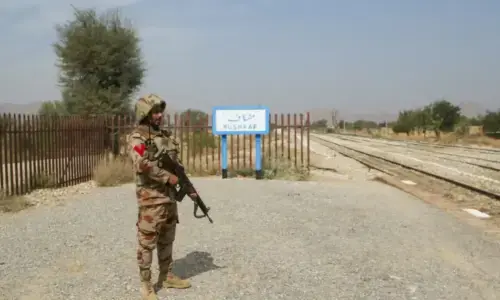
Pakistan has every reason to be concerned about TTP terrorism originating from Afghanistan. The last year was a bloody one for Pakistan; most of the attacks are believed to have been the handiwork of the TTP.
Therefore, the matter needs to be taken up repeatedly with Kabul until the threat of terrorist violence abates. Simultaneously, Pakistan must improve its own counterterrorism capabilities so that malevolent actors — both internal and external — are not able to threaten its security.
If the Afghan Taliban are not listening, Pakistan can try giving them incentives to cooperate.
This can include easing regulations with regard to people-to-people contact, particularly medical facilities, as well as removing barriers to the Afghan transit trade. In return, Pakistan must demand that the TTP and all other terrorist groups not be allowed to operate from Afghan soil, and that there is no more cross-border infiltration.
Dealing with the Afghan Taliban is necessary not only for Pakistan’s internal stability but also to ensure that Afghanistan is not isolated regionally.
Recently, the Taliban foreign minister met the Indian foreign secretary. Kabul is free to establish relations with whosoever it wishes; but Pakistan would be making a mistake if it severs ties with the Afghan Taliban, which would allow unfriendly states to strengthen their presence in Afghanistan.
Therefore, while Pakistan must continue to reiterate its concerns regarding terrorism, skilful diplomacy is required to ensure that ties with Kabul do not break down.
Published in Dawn, January 16th, 2025