• Donald Trump survived two assassination attempts; 37 candidates assassinated ahead of election in Mexico
• Longstanding ruling parties in South Africa, India retained power but lost outright majorities
• In Europe, the far right made gains in Germany, France and Austria
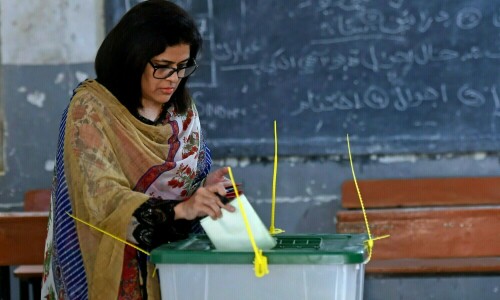
LONDON: Democracy looks bruised but not beaten as it heads into 2025. In a year in which countries representing almost half the world’s population called voters to the polls, democracies endured violence and major scares, but also proved resilient.
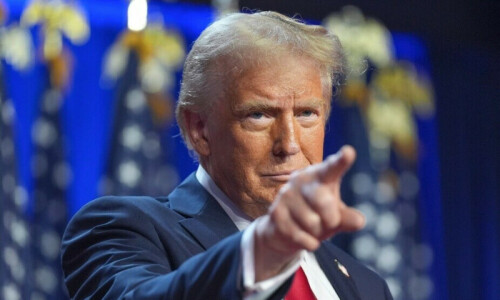
Former US president Donald Trump survived two assassination attempts and, despite fears of a contested result and unrest, he won back the White House in a clear victory and looks set for a peaceful transition to power next month.
Mexico recorded the bloodiest election in its modern history with 37 candidates assassinated ahead of the vote, but went on to elect its first woman president, Claudia Sheinbaum.
Across four continents, incumbent leaders were swept from office in elections that often sparked violence but ultimately achieved a central function of democracy: the orderly transfer of power in accordance with the wishes of voters.
Longstanding ruling parties in South Africa and India retained power but lost their outright majorities.
Why it matters
The political crisis in South Korea this month shows why the health of democracy matters.
In a few bewildering hours, the president of Asia’s fourth-largest economy and a key US military ally declared martial law in an evening TV address and then quickly backtracked after lawmakers and large crowds defied him.
Parliament later impeached President Yoon Suk Yeol but he rejected calls to quit, pending a constitutional court ruling on his future. The events spooked markets and South Korea’s allies which fret over its ability to deter nuclear-armed North Korea.
In Europe, the far right made gains in Germany, France, Austria, the European Parliament and also Romania, where the presidential election will be re-run after accusations of Russian meddling.
That fed a lively, scholarly debate about whether Europe was reliving a milder version of the 1930s when fascism went on the march.
Russia-leaning parties also did better than polls predicted in both Georgia and Moldova.
Europe’s shift to the right reflected economic anxieties, but the same worries also drove some political shifts in the other direction, such as in Britain, where the left-leaning Labour Party ended 14 years of conservative rule.
Overall, there were no attempts this year to prevent a peaceful transfer of power, according to Yana Gorokhovskaia, a research director at US-based pro-democracy lobby Freedom House, which delivers an annual report card on global democracy.
But Gorokhovskaia said autocracies grew more repressive in 2024, citing sham elections in Russia, Iran and Venezuela. Freedom House says voters had no real choice at the ballot box in a quarter of the 62 elections held from Jan 1 to Nov 5.
“It’s not so much that democracy is losing ground; it’s that autocracies are getting worse,” she said.
What it means for 2025
Far fewer elections are scheduled in 2025, though Germany will again test the far right’s appeal in a country so traumatised by the Nazi era that it installed checks and balances to stop right-wing extremists ever taking power again. German voters will elect a new parliament on Feb 23.
Another focus of 2025 will be how democratic institutions, such as a free press and an independent judiciary, fare under leaders who came to power or were re-elected this year.
In that context, Freedom House says it will look at what Trump does in his second term. Trump has said the mainstream press is corrupt, and that he would investigate or prosecute political rivals, former intelligence officials and prosecutors who investigated him.
The coming year is also likely to be momentous for Bangladesh and Syria, where revolutions toppled autocratic leaders with breathtaking speed.
The head of Bangladesh’s interim government, Nobel laureate Muhammad Yunus, has begun crafting electoral reforms after mass protests prompted Prime Minister Sheikh Hasina to quit and flee to India. He says an election could be held by end-2025 provided the most fundamental reforms are carried out first.
In Syria, after 13 years of civil war, armed rebels took the capital Damascus in a lightning advance, prompting President Bashar al-Assad to flee to Russia. Much of the country is now run by rebels led by the Hayat Tahrir al-Sham group, designated by some Western nations as a terrorist group.
The new rulers speak of tolerance and rule of law but so far they have made no public pronouncements on elections.
Published in Dawn, December 25th, 2024