THE struggle to eliminate extremism from society and create a more tolerant nation cannot succeed without the state’s firm commitment to achieving this goal. But when representatives of the state themselves are found to be involved in extremist acts, the road to deradicalisation is that much longer.
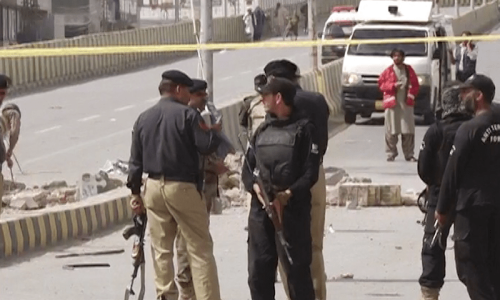
The murder of a man accused of committing blasphemy in a Quetta police lock-up — by a policeman no less — on Thursday is one example of the considerable challenges facing Pakistan on this count.
According to reports, the suspect had been taken into custody after a video in which he had allegedly made sacrilegious remarks went viral. Following the man’s detention, a mob led by religious parties besieged the police station where he was being held and attacked it with grenades. The law enforcers later shifted the suspect to another police station, where an officer opened fire on him.
While acts of sacrilege obviously cannot be condoned, there exist laws to address this serious issue. But when ordinary citizens or state functionaries take the law into their own hands, the gates to mob rule and anarchy are flung wide open. The Quetta incident is a grim reminder of Punjab governor Salmaan Taseer’s murder in 2011 by his own police guard.
More recently, a mob in Swat stormed a police station in June where a man accused of committing blasphemy was being held. The suspect was set on fire. Arguably, in no other Muslim country is such violence tolerated. These shocking incidents all point to the need to urgently deradicalise society.
The state, as well as the ulema, must reiterate the fact that no one can be allowed to play executioner in blasphemy cases, and that the law must take its course. In far too many of such incidents, the law is misused to settle personal scores. Therefore, strict action is required against those who exploit the sensitive issue of blasphemy.
Published in Dawn, September 14th, 2024