THE sentiment expressed was commendable, but will positive words also shape positive policies? That is the big question.
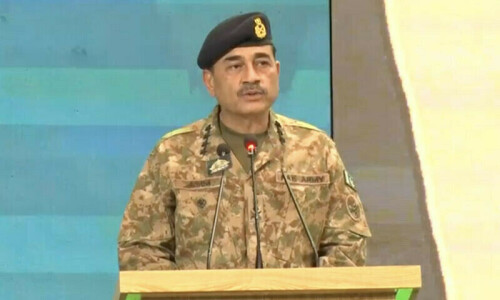
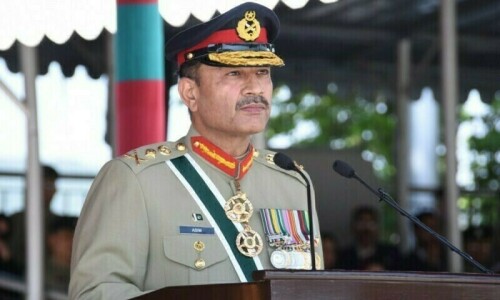
On Friday, at a ceremony to mark Pakistan’s 59th Defence Day, Chief of Army Staff Gen Asim Munir sent out an appeal for internal harmony, asking that the citizenry “not allow differences in political views to turn into hatred”.
Vowing to defeat those who sow chaos, despair and uncertainty among the people, the army chief hoped that strong relations between the armed forces and the public would serve as a foundation for defeating those trying to divide and conquer Pakistan.
“Whether facing hostile foreign elements or fighting the war against terrorism, carrying out relief activities in the face of disasters, or playing a role in projects related to the country’s progress, the Pakistani nation has always strengthened the army’s resolve,” he noted. Given the fraught internal security environment, rekindling this relationship is necessary.
It was evident from the words of the army chief that the institution continues to place great value on its relationship with the people it is tasked with protecting. No security operation can be considered successful in a holistic sense unless it has buy-in and support from the people, and at a time when the country is dealing with a sudden resurgence of major security-related challenges amidst a period of social upheaval, securing this buy-in and support has become both urgent and necessary.
In this regard, it was quite encouraging to note that the federal government had simultaneously launched a campaign to engage the leaders of various religious communities in helping strengthen counterterrorism operations and combat extremism and intolerance. The approach, it is hoped, will counter the menace of violent extremism by addressing the ideological aspects of the problem while the armed forces’ efforts take care of the rest via kinetic operations.
However, engaging religious leaders and launching fresh operations may not be enough. It has been clear for a while that local populations in areas currently most affected by terrorism and militancy still do not want grand operations, mainly because similar exercises in the past created externalities that inflicted very high costs on the affected populations.
Furthermore, some segments, especially some of the more vocal social movements in Balochistan that have been agitating for constitutional rights, fear that they may be bundled up with militants and made to suffer the same treatment decided for the latter simply because of their outspoken activism.
There is an urgent need to address these fears and assure all those who eschew violence and militancy that their interests will be protected, and they will not be targeted under the state’s counterinsurgency plans. If the state needs its people behind it, it should remain mindful and sensitive to their concerns.
Published in Dawn, September 8th, 2024