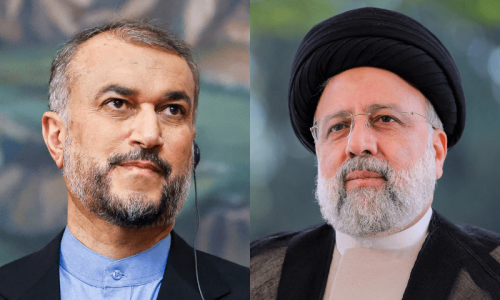
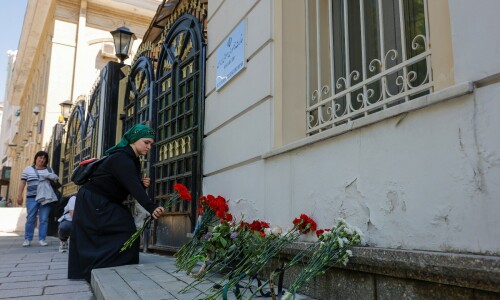
THE tragic helicopter crash on Sunday, in which Iranian president Ebrahim Raisi, foreign minister Hossein Amir-Abdollahian and several other officials lost their lives, comes at a critical time for the Islamic Republic. While internally, Iran is faced with significant economic challenges, externally,
Tehran is in the midst of an undeclared war against Israel, with the Zionist state’s savagery in Gaza the key trigger of this conflict. However, a power vacuum within Iran is unlikely, as an interim president has been named, and elections are due within 50 days. Raisi and his delegation were returning from Azerbaijan when his copter went down in a mountainous terrain, apparently in bad weather. The deaths of all on board were confirmed early on Monday.
Raisi oversaw a truncated but eventful term. He took the reins in 2021. One of the most formidable internal challenges to his administration came in the form of the 2022 Mahsa Amini protests, after a young woman died in controversial circumstances, reportedly while in the custody of the ‘morality police’. Anti-government protests shook Iran, and the state responded by cracking down on demonstrators.
On the foreign front, Raisi had reopened channels with Saudi Arabia, thanks to Chinese mediation last year, a process in which Amir-Abdollahian also played a crucial role. But perhaps the late president’s most difficult foreign policy moment came in the aftermath of the Israeli attack on Iran’s diplomatic facility in Damascus last month, killing a number of high-ranking Iranian military men. Tehran responded with an unprecedented drone-and-missile strike on Israel some two weeks later.
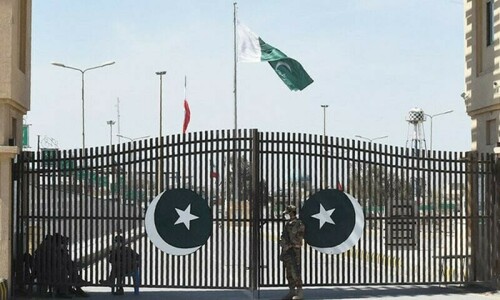
With regard to Pakistan, under Raisi’s watch, efforts were made to improve bilateral ties. While there was an ugly exchange of missiles in January over alleged militant hideouts, the late leader’s state visit to Pakistan last month indicated that Tehran wanted to deepen ties with this country. It is hoped the incoming Iranian president continues on this trajectory.
Due to Iran’s regional and geopolitical influence, the world will be watching the power transition carefully. While some Western observers dismiss the Iranian system as a totalitarian dictatorship run by the supreme leader, the reality is more complex. While the supreme leader does exercise a key veto over state policies, the president and other centres of power are not without agency.
Iran’s new leader will have to confront economic woes and political polarisation internally. On the other hand, the Middle East presently resembles a powder keg, principally due to Israeli atrocities in Gaza.
Iran has a major role in regional dynamics, as it is a vocal supporter of Hamas, Hezbollah and other armed groups fighting Israel. Therefore, much will depend on how the incoming Iranian president and the Islamic Republic’s establishment choose to respond to continuous Israeli provocations.
Published in Dawn, May 21st, 2024