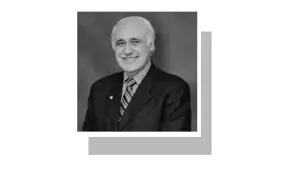
Pakistan suffers more due to Afghan problem than wars with India: Ambassador Durrani



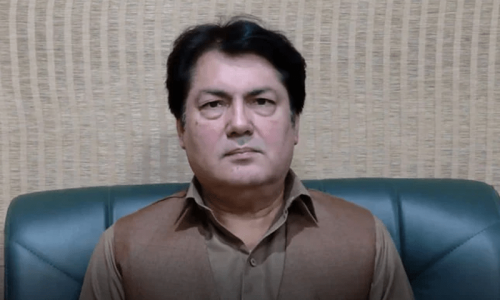
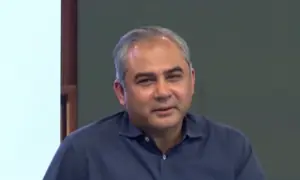
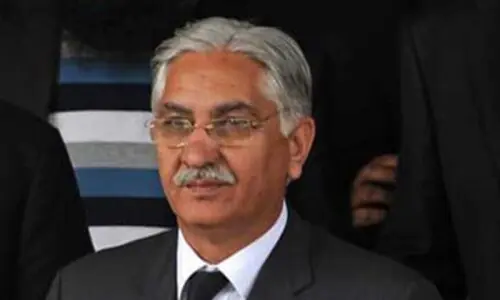
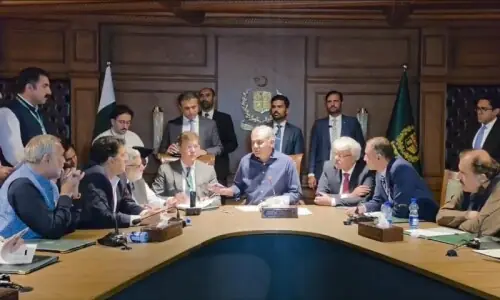
Pakistan’s Special Representative on Afghanistan Ambassador Asif Durrani said on Wednesday that the former has suffered more due to the latter’s internal situation than its three wars with India in terms of blood spilt and finances drained.
Ambassador Durrani was speaking at the one-day International Conference “Pakistan in the Emerging Geopolitical Landscape”, organised by the Institute of Strategic Studies Islamabad (ISSI) and the German Friedrich Ebert Stiftung (FES).
Durrani said over 80,000 Pakistanis died during the past two decades of the War on Terror, saying that the country was still counting its dead and injured.
“After the withdrawal of Nato forces, it was hoped that peace in Afghanistan would bring peace to the region. However, such expectations were short-lived.”
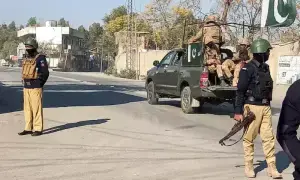
He said attacks by the outlawed militant Tehreek-i-Taliban Pakistan (TTP) group on Pakistan’s border areas increased by 65 per cent, while suicide attacks increased by 500pc.
“The TTP’s enhanced attacks on Pakistan while using Afghan soil have been a serious concern for Pakistan. Another worrying aspect is the participation of Afghan nationals in these attacks,” he maintained.
Explaining how Pakistan suffered due to the developments in Afghanistan, he said Pakistan had suffered geopolitically since the Soviet Union invaded the neighbouring country.
“The post-9/11 world order has negatively impacted Pakistan. Apart from losing 80,000 citizens’ lives, including 8,000 law enforcement agency personnel, the country’s economic opportunity cost is estimated at $150 billion,” Durrani said.
He pointed out that while Pakistan was designated as a non-Nato ally, the imposition of travel advisories by Nato members adversely affected the country as doing business with Pakistan became expensive and insurance costs increased. Consequently, Pakistan’s exports remained stagnant.
“Second, Afghanistan has become a permanent fixture in Pakistan’s regional paradigm for over four decades.”
Talking about the future outlook for Pakistan in the regional context, Durrani said that while “our eastern neighbour is likely to continue with its anti-Pakistan pursuits, the western border poses an avoidable irritant in the short to medium term.”
However, with deft diplomacy, Pakistan can overcome its difficulties with Afghanistan, including the TTP challenge, he pointed out.
Ambassador Durrani was of the view that China and Iran would remain friends and offer a sound basis for a durable partnership in terms of security and economics.
“The Indo-US budding romance, flux in Middle Eastern politics and Israel’s atrocities against the Palestinians would pose a formidable challenge for Pakistan and its diplomacy,” he said.
The speakers of the session provided a comprehensive analysis of the evolving landscape in Afghanistan, emphasising the long-term consequences of investing in militarised education.
They highlighted the destructive impact of divisive politics, which had weakened the economy and polarised society in the region.
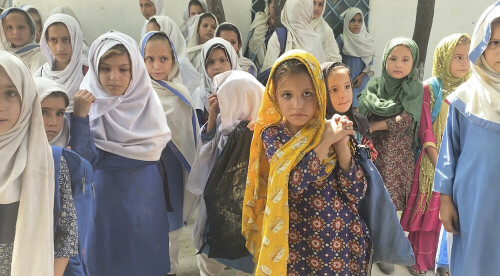
The speakers also pointed out the role of ethnic discord in Afghanistan, with ethnic fault lines contributing to the complex on-ground situation. In particular, the speakers shed light on the challenging situation for women’s education in Afghanistan and emphasised the isolation and humanitarian crisis faced by the people of Afghanistan.
They expressed optimism about Afghanistan’s potential, particularly its historic role as a transit route connecting East and West.
To address Afghanistan’s issues, the speakers recommended a proactive approach and an inclusive strategy.
They suggested regional dialogue and cooperation, border and refugee management, leveraging partnerships and engagement with locals, building the economic capacity of Afghanistan through connectivity, trade, and transit routes, and adopting a broader perspective on the Afghan issue.
The working session on the theme of “Unravelling Afghanistan’s Shifting Landscape” was moderated by Amina Khan, Director of the Centre for Afghanistan, Middle East and Africa.
The speakers concluded by recognising the need for a nuanced understanding of the on-ground situation and the potential consequences of different policy interventions.
The second working session titled, “From Dependency to Diversity: The Evolution of the Middle East” was moderated by Dr Shabana Fayyaz, chairperson and associate professor at the Department of Defence and Strategic Studies in Islamabad’s Quaid-i-Azam University.
Speakers emphasised that the current geopolitical landscape of the Middle East was marked by a multitude of dynamic shifts and evolving alliances.
Amid efforts towards economic diversification in the region, there was growing apprehension surrounding security arrangements, particularly in light of the United States’ strategic reorientation towards the Asia Pacific region.
This shift prompted a reassessment of power dynamics within the region, as traditional Western influence faced challenges from the rising prominence of China.