A STRING of mysterious killings in Pakistan over the past few years was widely believed to be the handiwork of Indian intelligence. This assumption was strengthened by the fact that most victims were linked to Kashmir-centric armed groups, while in at least two cases the assassinations were publicly linked to India by the foreign secretary.
Now, an investigative report in The Guardian lends further credence to the belief that New Delhi has been organising hits on Pakistani soil. According to the British paper, at least 20 individuals have been murdered since 2020 in this country at the behest of Indian intelligence operatives. The outlet says it has seen evidence provided by Pakistani security agencies, while the report notes that Indian officers have also confirmed the new policy of assassinating enemies and dissidents on foreign soil.
Pakistan is not the only country where those in New Delhi’s bad books have paid with their lives. Canada confronted India quite sternly when Hardeep Singh Nijjar, a Khalistani activist and Canadian national, was murdered outside a gurdwara in British Columbia last year. Indian spooks had also reportedly tried to kill a Sikh activist in the US. While India has denied involvement in all these cases, including murders in Pakistan, these denials lack credibility.
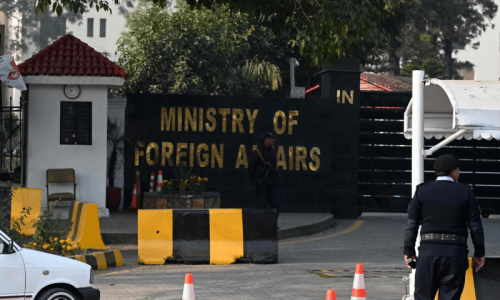
Pakistan must confront these considerable threats to its security and sovereignty both internally and on the external front. The Foreign Office has said those responsible for the murders need to be brought to justice, while also emphasising the need for a coordinated international response to India’s brazenness. If India has evidence against individuals, it must use diplomatic channels to communicate the information to Islamabad. By no means can India or any other hostile foreign actor act unilaterally within Pakistan’s frontiers, and arbitrarily take out individuals.
Our own internal lapses also need to be investigated, as the fact that 20 people were neutralised by foreign operatives on Pakistani soil should send alarm bells ringing within the intelligence and law-enforcement agencies. There are also reports, as mentioned by The Guardian and cited elsewhere earlier, that many of the operations in Pakistan were planned and orchestrated in a friendly Gulf country.
Islamabad must coordinate with the security agencies of our foreign friends to ensure that their soil is not being used for anti-Pakistan activities. The evidence collected in these cases must be shared with foreign governments. Moreover, the reports of Indian involvement in assassination campaigns strengthens Pakistan’s case where New Delhi’s reported destabilising activities in Balochistan are concerned.
The message, through diplomatic channels, to India must be clear: this campaign of subterfuge must stop, and Pakistan’s sovereignty be respected. If India refuses to stop these subversive activities, then Pakistan reserves the right to take up the issue at the highest international forums.
Published in Dawn, April 6th, 2024