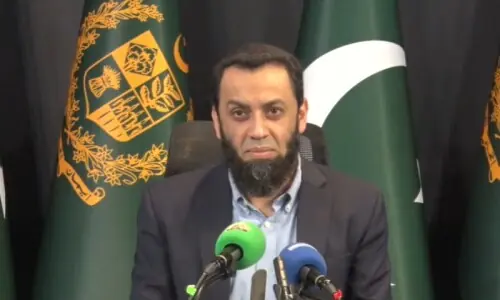
IN a change of heart, the caretaker prime minister attended the hearing of the Baloch missing persons’ case in the Islamabad High Court on Wednesday after skipping two earlier summons. Yet much of what Anwaarul Haq Kakar said about the issue was problematic, indicating that the state is out of touch with the reality of the situation. Mr Kakar said that while the state is criticised for picking up suspected militants, civil society did not condemn insurgents. He suggested that since militants did not respect the law, they should not be treated as law-abiding citizens are, while also noting that the criminal justice system was on the verge of collapse. Where the failure of the legal system is concerned, this paper has always argued that if the courts and prosecution are not performing, the solution lies in fixing them; circumventing the legal system is not the answer. Regarding the state of law and order in Mr Kakar’s home province, a deeper analysis is required.
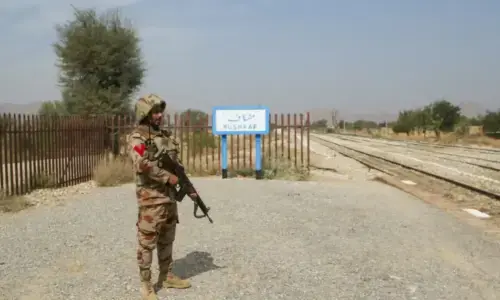
Without doubt those who wage war against Pakistan should face the law. Yet it is also true that militancy — whether of the Baloch separatist variety, or the extremist strand championed by terrorist groups such as the banned TTP — gains its oxygen from deprivation and people’s misery. When people feel the system has failed them, some take to militancy. Hostile foreign elements also exploit these weaknesses. The human development figures of Balochistan are hardly reassuring. According to Unicef, 78pc of girls in the province are out of school, while the World Bank says that in most of Balochistan’s districts, nearly half of the under-five population is stunted. There are other similarly abysmal figures. Therefore, when the people see that their quality of life is not improving, especially as compared to other parts of the country, their disenchantment with the state grows. Moreover, the political process in Balochistan is seen largely to be compromised, adding to the people’s disillusionment, as ‘electables’ are promoted over genuine popular representatives. The argument that tribal sardars stand in the way of progress is only partially true; the development statistics from districts where the sardari system is not in vogue are equally disappointing. So while the state must stamp out militancy, it also needs to make an honest appraisal of the underlying factors fuelling separatism, and address them judiciously.
Published in Dawn, March 1st, 2024