Narrative of ‘Taliban 2.0’ has collapsed, says Huma Baqai



• Claims ‘Karachi-Quetta-Kabul nexus’ funding militant groups
• Moeed Yusuf says ‘politicisation, polarisation’ taking focus away from actual issues
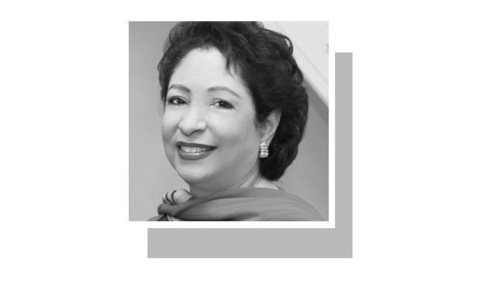
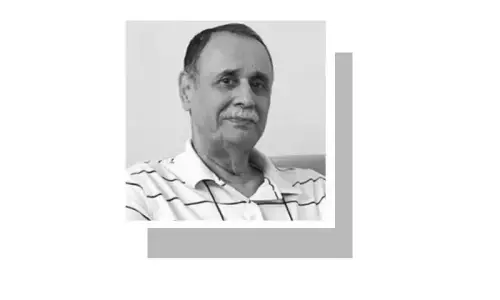
KARACHI: The narrative of Taliban 2.0, being put forward by many in Pakistan – that the new Taliban regime is better than the previous one — has totally collapsed, security and policy analyst Huma Baqai said on Sunday.
Speaking at the launch of her book, Collected Works on Foreign Affairs and Security Policy at the Adab Festival, she called for attention to the condition of women and their rights, girls’ education and Afghan soil being used against the state of Pakistan to substantiate her argument.
Ms Baqai noted there had been a significant rise in attacks in Pakistan by the banned Tehreek-i-Taliban Pakistan (TTP) through the Afghan border ever since the Taliban took over Afghanistan.
Speaking about Pakistan’s Afghan policy, she said there was no continuity and consistency in it, something the country needs to focus on.
Ms Baqai voiced her support for the deportation of undocumented Afghan nationals, calling it a ticking time bomb for Pakistan, considering that there was a “Karachi-Quetta-Kabul nexus” which was involved not only in smuggling but also in terrorist activities. She said that a lot of their funding was being generated mainly through Karachi.
She was of the view that no country allowed illegal immigrants to live inside its borders. Iran, she said, had put Afghan refugees in camps from day one and that’s why they didn’t create such problems for them.
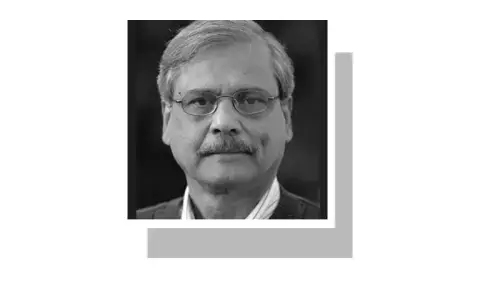
Former SAPM and Beaconhouse National University vice chancellor Mooed Yusuf agreed that sending illegal Afghans back was a good decision. However, he said the issue of smuggling would continue to pose a challenge as many Pakistanis were also involved in it.
“And as far as the nexus of crime and terrotist activities is concerned, it needs to be studied closely,” he added.
He emphasised thatPakistan needed to make sure that it did not face a strategic loss in the entire process concerning Afghanistan and the deportation of illegal refugees.
Speaking about policy-making in Pakistan, he said deep homework was required to make good policies on key issues but such homework was often missing and, therefore, most of the country’s policy decisions were quite poor.
“Currently, there is so much politicisation and polarisation that there is no focus on actual issues; on what is good or bad,” he said.
In response to a question about why Afghanistan has so many insecurities as far as its relations with Pakistan were concerned, Mr Yusuf said that an important part of policy-making, which was often ignored by many, was that there should be a particular group among policy-makers in Pakistan that voiced Afghanistan’s side to better present its views; i.e. what Afghanistan wants and what its reservations were. This, he said, would be very beneficial for Pakistan as well as for Afghanistan.
Ms Baqai noted that it was important to promote discussions on policy making in the country, especially among students.
She further said that changes were needed in teaching of subjects like policy making and international relations by combining them with economics, technology etc so that those could become useful for graduates in practical fields.
Mr Yusuf appreciated the critical nature of Ms Baqai’s new book and said that writing that did not criticise, rather supported the status quo. Her book contains articles on various regional and global strategical and security issues, with a unique article titled ‘Feminisation of Terrorism’, which explores the reasons behind growing involvement of women in terrorist activities.
Published in Dawn, November 27th, 2023