THE seeds of mistrust between Afghanistan and Pakistan were sown even before independence in 1947. By 1946, it had become clear that British India would be partitioned. The Afghan government saw an opportunity to revise the Durand Line of 1893 and lay claim to several territories that were to become part of Pakistan. When a referendum held in the then NWFP in July 1947 ruled decisively in favour of joining Pakistan, the Afghan government started championing the cause of independence for the Pakhtuns in a separate state (‘Pashtunistan’). On Sept 30, 1947, Afghanistan’s representative cast the only negative vote for admitting Pakistan to the UN. That vote was later withdrawn but the hostility it represented cast a long shadow of mistrust between the two countries.
During the Pakistan-India war of 1965, Afghanistan chose to stay neutral though public sympathy appeared to be with Pakistan, leading many Pakistani strategists to believe that Afghanistan could ensure strategic depth for Pakistan. After the Soviet and US invasions of Afghanistan in 1979 and 2001, Afghanistan plunged into a series of crises, causing enormous hardship to its people. Pakistan opened its doors to millions of Afghan refugees and even supported Afghan militants — referred to as mujahideen — who were resisting the occupiers. That built expectations in Pakistan that a friendly Afghan government denying space to elements hostile to Pakistan could be a strategic asset. This expectation has remained largely unfulfilled, even during the past two years of a seemingly friendly government in Kabul led by the Taliban.
How should Pakistan deal with a state which distrusts it so deeply? The first option would be to start treating Afghanistan as a sovereign state whose people choose rulers without outside influence. Secondly, Pakistan needs a multipronged approach to deal with the difficult situation created by Taliban rule.
Politically, Pakistan should maintain regular contact with the Taliban, through formal and back channels, to convey its concerns and also listen to their perspective. But this should not mean that Pakistan extends formal recognition to the Taliban government. That question should be addressed in consultation with Afghanistan’s neighbours.
In dealing with Kabul, Pakistan needs a multipronged approach.
Ideologically, Pakistan should encourage our ulema, particularly those in whose madressahs the Taliban were trained, to engage with the Afghan ulema to persuade the TTP to refrain from carrying out terrorist acts against Pakistan’s people.
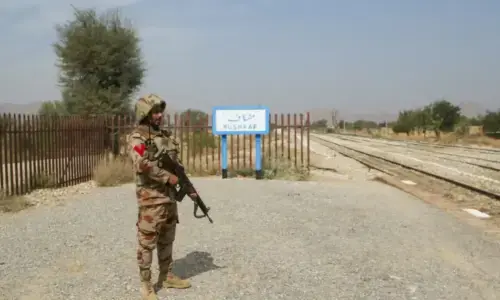
Militarily, Pakistan should maintain its policy of not talking to the TTP but engage with the Afghan military leadership to persuade them to not provide safe havens to the TTP. We should also manage the border more humanely so that tribes across the border have a friendly attitude towards Pakistan and do not provide shelter to the TTP.
Economically, Pakistan should do everything to boost bilateral trade and facilitate Afghan transit trade through its ports. This is a positive leverage that must be used prudently to win the hearts and minds of Afghanistan’s trading community. Pakistan should also encourage the regional TAPI and CASA-1000 projects as economic prosperity will help counter militancy.
The government has decided to evict all foreign nationals residing in Pakistan illegally, including undocumented Afghan refugees. Though a right decision in principle, its implementation carries serious implications, and would require meticulous, pragmatic and realistic planning, preferably in consultation with UNHCR and the Afghan government.
Diplomatically, besides bilateral engagement, we should coordinate closely with regional countries on the following international expectations from the Taliban: an inclusive government, girls’ right to education, and effective counterterrorism measures.
The recent Moscow Format Consultations, which brought together special representatives from several regional states, including Pakistan, urged the Afghan authorities to prevent their country from becoming a “terrorism and instability hotspot”. These countries felt that non-regional players, particularly the US-led Western coalition, must shoulder the responsibility for post-conflict reconstruction of the country, unfreeze Afghan national assets and lift unilateral sanctions.
There are reports that the Taliban leadership includes pragmatic elements as well as hardliners. Pakistan’s top priority should be to stay engaged with all segments of the Taliban and persuade them that mutual mistrust is not serving the people of either country. Overcoming that mistrust will take time. At this point, establishing good-neighbourly ties is a realistic goal that can serve the larger interest of both countries and the region.
The writer is a former foreign secretary and author of Diplomatic Footprints.
Published in Dawn, October 8th, 2023