SIX hundred billion rupees is not pocket change; not for a country stumbling from one crisis to another as it tries to keep ahead of a possible default.
In a responsible government’s hands, such a sum could be utilised for immense public good, such as funding hospitals, establishing schools, creating roads or, simply, paying off national debt.
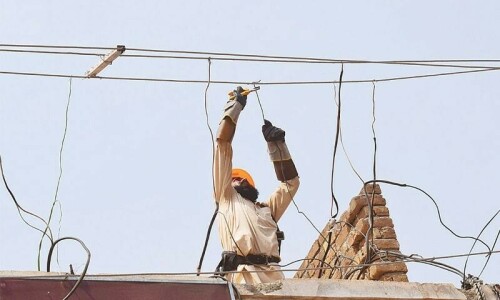
Yet, if our caretakers are to be believed, this is the ballpark figure for annual theft and recovery losses in the country’s power sector.
Just the scale of it makes it seem like the ultimate scam: how else does one describe some groups of people being allowed for years to consume electricity worth hundreds of billions for free, while the government subsidised this theft either with public funds or by burdening honest citizens with higher costs to pay for others’ misdoings.
As long as the government was picking up most of the tab, few were bothered. Now that the burden has started shifting to the public, the inflation-weary are asking difficult questions, which the authorities are struggling to answer.
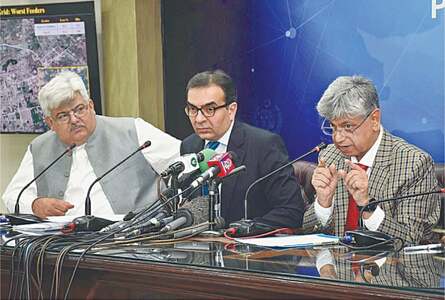
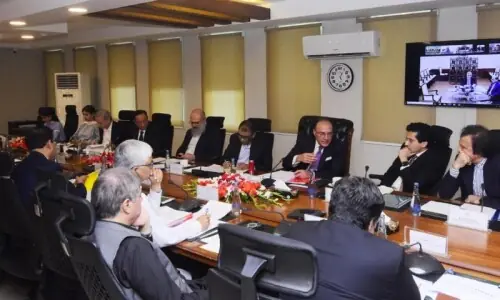
The caretaker government on Wednesday blamed the “jet-black integrity” of some officers in the power distribution network, as well as the politicised management of power distribution companies, for facilitating this daylight robbery of public resources.
It was a rather incriminating statement to make. The citizenry has a right to know why nothing was ever done to bring such elements to book, especially when hundreds of billions of rupees in losses were being recorded.
The government has finally resolved to go after the parasitic elements in the power distribution network, and it is hoped that there will be no further delay in securing results.
Meanwhile, it is also promising a three-pronged strategy to minimise theft and recovery losses, which includes mobilising the police and administration to launch a crackdown in high-theft areas. All of these look good on paper, but their efficacy can only be gauged once there are results to discuss.
It must be highlighted that it will not be easy to overhaul the power sector’s recoveries in a short period. The availability of ‘free’ electricity has likely created significant distortions in local economies where theft and refusal to pay are endemic.
The sudden imposition of high electricity bills in these areas during what is an already fraught economic climate will, therefore, cause considerable upheaval, and police alone may not be able to contain the resulting social fallout.
However, this cannot be the reason to keep putting off the exercise. Theft and recovery losses have grown to the hundreds of billions because successive governments kept kicking the can down the road.
The authorities must now ensure that bill-payers will no longer be cheated out of their hard-earned money by unscrupulous elements.
Published in Dawn, September 8th, 2023