THOUGH the nation is going through a painful cost-of-living crisis, the civilian and military leaderships are of the view that better days are just around the corner.
They base their optimism on the hope that our friends in the Gulf are ready to pour in tens of billions of dollars into Pakistan in the shape of deposits as well as investments.
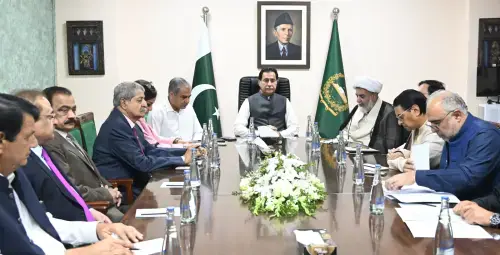
While speaking on Monday, interim Prime Minister Anwaar-ul-Haq Kakar said that Saudi Arabia and other Middle Eastern states were likely to invest $25bn in the country over the next two to five years. Similar comments were reportedly made by the army chief while meeting business tycoons in Karachi recently.
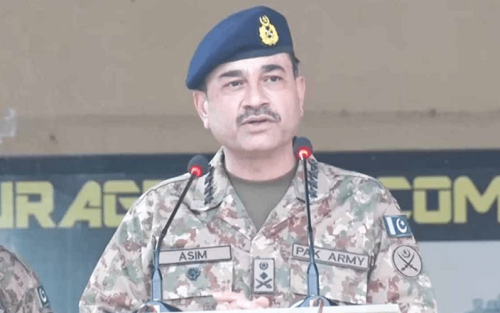
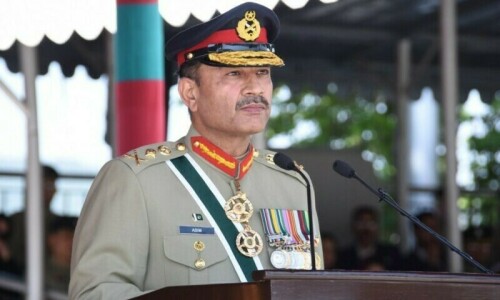
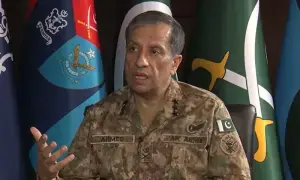
As reported, the COAS told businessmen he had asked the Saudis and Emiratis to deposit $10bn each to help shore up Pakistan’s dwindling foreign exchange reserves. Moreover, the army chief is reported to have said that between $75bn-100bn could be invested in the country by the Gulf states.
While Pakistan needs all the investment it can get, we must ask how realistic these projections are.
For example, the country went through an excruciating period of uncertainty — when default seemed to be staring us in the face —before the IMF approved a mere $1.2bn in July, the first tranche of a $3bn bailout.
What guarantee do we have that our friends and benefactors will be willing to shower us with dollars — amounts much larger than the bailout — when we were made to jump through multiple hoops for $1.2bn?
The fact is that even our trusted partners, including the Gulf states and China, sent not-so-subtle messages that unless we comply with IMF demands, they were unlikely to help. Quite clearly, the age of the free lunch is over.
The international community, including our traditional allies, expects us to address the fundamentals of our sputtering economy, as well as political instability, before they put more money into Pakistan. Mr Kakar had also alluded to this, when he mentioned that reforms were needed in taxation and the power sector.
Questions also arise about the caretakers’ intentions — their long-term plans are puzzling in view of their constitutionally limited stay. The interim set-up should only focus on keeping the economy stable, ensure timely polls, and then call it a day.
Long-term economic policymaking is the responsibility of the next elected government, that should not feel the need to rely on input from the security establishment.
Without doubt, this country has ample resources and a hardworking populace. Yet unless we fix our fundamentals — taxing the untaxed, curbing corruption, reining in wasteful spending — this potential will remain unutilised.
Moreover, those who put money in Pakistan will expect decent returns on their investments, which can only be achieved through the rule of law, political stability and democratic continuity.
Published in Dawn, September 6th, 2023