A competitive cost of energy, particularly electricity tariffs, and its uninterrupted supply are essential for oiling the industry’s wheels. Rejecting the recent hike in electricity bills, the Federation of Pakistan Chambers of Commerce and Industries said it was “debilitating both for residential and commercial consumers, with inflation already killing businesses and rendering them unprofitable and bankrupt”.
The various issues related to high electricity tariffs were also highlighted in public discourse following countrywide citizen protests, especially marked by the torching of power bills. That demonstrated how extractive policies pursued by both the government and a strong segment of the stakeholders have made a mess of the power sector.
Consumers are expected to cough up Rs1.3 trillion in capacity payments to idle power plants in the current fiscal year. Under the binding agreements, independent power producers are paid capacity charges even if the government companies are unable to take electricity from them.
Policymakers have failed to carry out energy sector reforms to control growing theft and power and gas sector losses and instead periodically increased prices to recover lost revenues. Honest consumers are paying for power thefts and circular debt.
Short-lived regulatory measures did help cut imports and improve the current account position, but at the cost of reducing manufacturing, slowing down economic growth, investment and exports
Then, heavy taxes have been imposed on fuel and power bills to pay for the state’s surging expenditure. One estimate is that high taxes contributed at least 40 per cent to each bill of the Islamabad Electric Supply Corporation.
Consumers are expected to cough up Rs1.3 trillion in capacity payments to idle power plants in the current fiscal year
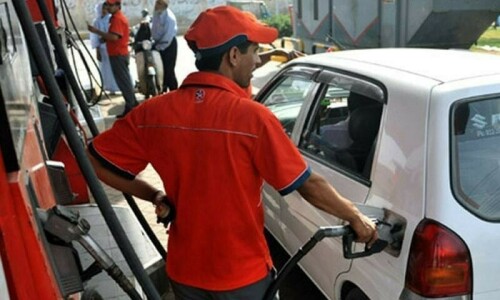
The unprecedented rise in petroleum product prices has primarily helped the Federal Board of Revenue (FBR) collect Rs4 billion in excess of the July tax target. “We are receiving maximum revenue due to highest-ever inflation,” says an FBR official.
The major factor attributed to the current price shock is the free fall of the rupee. Another 10-12pc hike is due to interest rates.
Within 18 days of the interim government, the dollar had appreciated by Rs14.40 to a record of Rs303.05 from Rs288.65 in the interbank market on August 11. Currency dealers quoted the open market rate at Rs318 on August 29. The prices quoted by independent sources are in the range of Rs320-325 in the open market, which was stated to be very close to grey market rates.
In view of rampant speculation in the forex market, analyst Dr Fahd Rehman says the flexible exchange rate is suitable only for those countries that have large foreign exchange reserves. And frequent devaluation of the rupee, he adds, would make future imbalances in the current account more difficult to handle.
Others see the baffling issue in a much larger context. “We need to recognise that the rupee’s slide and the causes of the country’s currency market’s continued volatility are only the symptoms of a far more serious disease, that is, the inherent domestic structure of the economy,” says an analytical piece. “While treating symptoms can provide relief from pain, long-term stability of the rupee and the economic recovery depend on how quickly we can tackle the structural issues.”
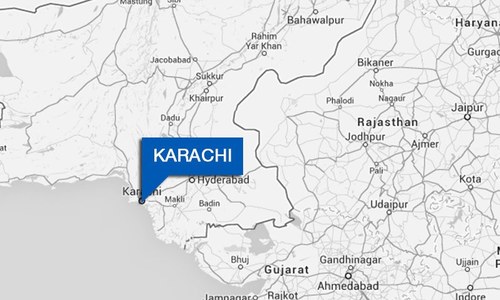
This view is shared by the business leaders. A dialogue titled ‘Promoting localisation and harnessing indigenous energy resources for sustainable energy’ was recently organised in Karachi by the Overseas Chamber of Commerce and Industry. Participating experts and stakeholders stressed that self-reliance in energy, achieved by embracing low-cost domestic resources for power generation, would propel Pakistan towards fortified economic resilience.
With a focus on tackling symptoms instead of curing the chronic disease, even steps with brief positive outcomes in a particular area often have undesirable impacts on the economy as a whole.
The short-lived regulatory measures did help cut imports and improve the current account position, but at the cost of reducing manufacturing, slowing down economic growth, investment and exports.
The current account deficit in July was reduced to $809 million from $1.26bn in the same month in FY22. According to market perception, this trend is unlikely to be sustained, prompting the value of the rupee to slide against the dollar.
In July, exports of textiles and clothing fell by 11pc due to higher production costs, liquidity constraints and lower global demand. Simultaneously, non-textile exports fell by 9.87pc compared to the same month in the preceding year. However, exports of services grew by 2.78pc.
The governments have primarily relied on devaluing the national currency and on unaffordable subsidies to make low-value-added goods competitive in a developed market segment that caters to the demand of their blue-collared workers. And trade deficits are financed by unaffordable foreign debts and workers’ remittances, both now apparently difficult to sustain at current levels.
Since independence, we have hardly been able to move the needle for exports of goods and services stuck at the paltry 8pc of the GDP, says an analyst.
Enhanced and diversified value-added production based on cheaper indigenous inputs could produce a bigger trade surplus after meeting domestic demand. Trade diversification could help us to sell goods and services at the best price and import them from the cheapest source.
It is worth noting here that in these times of distress, auto parts makers are diversifying their business and introducing some new engineering goods. It is the first time that an auto parts maker is reported to have started producing hydraulic punching and clinching machines, which were successfully exported to UAE. It is an example for others to emulate.
Published in Dawn, The Business and Finance Weekly, September 4th, 2023