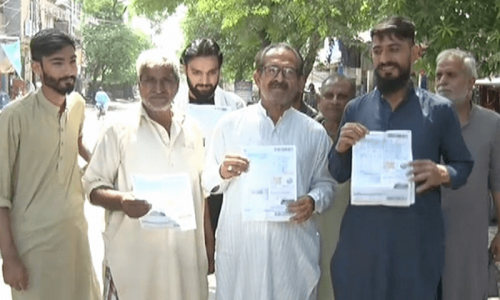
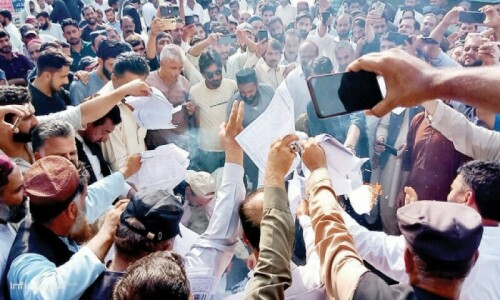
BLOATED electricity bills have triggered countrywide protests. Crushed by the spiking cost of living, hundreds of consumers took to the streets in most cities yesterday to give vent to their seething anger over growing incidence of indirect taxes in their electricity bills.
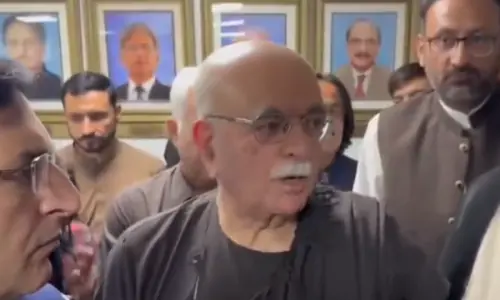
Some political parties joined them to cash in on the growing discontent. The interim government of Prime Minister Anwaarul Haq Kakar is also feeling the heat and has convened a meeting of power sector authorities today to find a way to provide some “relief” to frustrated power consumers.
How? It’s not yet clear.
The caretakers have little space to help inflation-stricken citizens without compromising on the fiscal goals of the present IMF programme, which would be disastrous for the economy, as it could make the multilateral lender suspend or terminate the programme.
The increasing price of electricity is essentially a governance and fiscal problem for which successive governments are to blame. On the one hand, the ruling classes have relied on heavy indirect taxes on fuels and power bills to pay for the state’s ballooning expenditure, instead of effectively taxing powerful lobbies like retailers, real estate and agriculture because of their political clout.
On the other hand, they’ve utterly failed to implement energy sector reforms to control growing theft and power and gas sector losses, and chosen instead to periodically increase prices to recover lost revenues from honest customers. It goes without saying that the surging fuel and energy costs are devastating the working-class and salaried households, as well as industry.
At least a third of the electricity bill is made up of taxes and other government charges. Likewise, almost a quarter of the petrol price consists of taxes and levies. The government can’t remove or even partially reduce these levies without an IMF waiver. At best, they can offer consumers the ‘facility’ of paying their bills in installments, as was decided by Shehbaz Sharif last year.
This is no solution though. It will only delay the calamity for the consumers. The toxic mix of inflation and economic recession over the last two years, coupled with inequitable tax policies, have brought households under renewed pressure.
Inflation, considered to be the most regressive tax on the poor-middle-income families, remains elevated at above 28pc. Fuel and food prices have hit the hardest as tens of millions of people scramble to find some way to survive. Unable to cope with the rising cost of living that is exacerbating inequalities in society, many are ready to risk their lives to leave this country.
With the authorities unlikely to change their bad fiscal and tax policies, and take tough decisions to reform the energy sector, working-class and salaried households can expect to face continued pain for a much longer time than the rulers would like us to believe.
Published in Dawn, August 27th, 2023