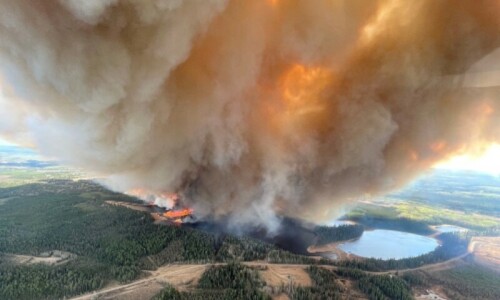
Massive wildfires in Canada have already spewed out twice the smoke emissions than the previous whole-year record, the EU’s climate monitor said on Thursday, with the blazes expected to continue to scorch their way through forests for weeks or even months.
The devastating wildfires have burned some 30 million acres this year so far, incinerating an area larger than the size of Cuba or South Korea.
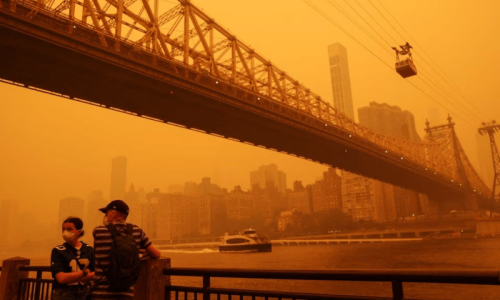
Enormous plumes of smoke have choked the air in Canada and neighbouring United States, affecting more than 100 million people and at times disrupting flights and forcing the cancellation of outdoor events.
Europe’s Copernicus Atmosphere Monitoring Service (CAMS) said it had tracked the fires since the season began at the start of May, as the blazes scorched across large areas of the country.
As of the end of July, it said the total carbon emissions for the year to date have now reached double that of the full annual smoke pollution from 2014, the previous record year.
CAMS Senior Scientist Mark Parrington said the fire emissions had “continued to increase almost continuously to a level which is already considerably higher than the previous annual total fire emissions for Canada in our dataset”.
“As fire emissions from boreal regions typically peak at the end of July and early August, the total is still likely to continue rising for some more weeks and we will continue to monitor.”
Wildfires in the Northern Hemisphere typically burn from May to October, with peaks in July and August, coinciding with the hottest and driest months of the year.
This year has seen widespread, record-breaking fires across Canada as well as large blazes in Russia.
More recently the wildfires have raged further north, including in the Arctic Circle, producing “significant smoke emissions” CAMS said in a statement.
Currently, the total wildfire carbon emissions from Canada are around 290 megatons, while the previous record registered in 2014 of 138 megatons, said CAMS, whose records go back to 2003.
Canada is among the fastest-warming regions on the planet, and climate change has amplified both the intensity and frequency of the extreme weather events faced by the country.