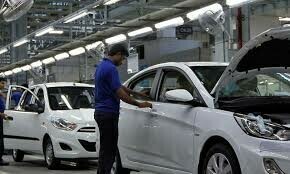
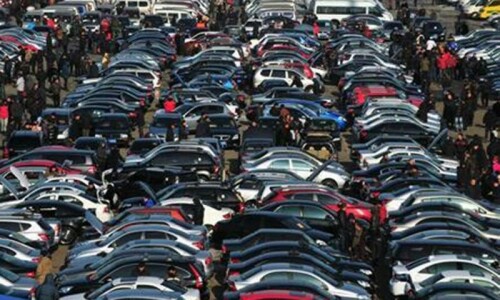
PAKISTAN’S car industry is in deep trouble. The last fiscal was one of the worst years the industry has ever seen. Its sales decreased in FY23 by almost 56pc to 126,879 units from a year ago. The plunge in car sales is driven mainly by three reasons.
First, the demand for auto loans, historically a major driver of car sales in the country, is declining significantly because of the State Bank’s enhanced requirements and soaring interest rates. This is already showing in the drop of Rs75bn in the outstanding auto loan portfolios of financial institutions to Rs293bn at the end of the last fiscal year.
Secondly, the restriction imposed by the central bank on the import of CKDs and parts to slow down the dollar outflow meant that the industry produced fewer units last year compared to the previous one.
Thirdly, the huge increase in prices due to the rapid exchange rate depreciation and record headline inflation has put even the cheapest car out of the reach of most people.
Analysts agree that it is likely that industry sales will remain suppressed over the next couple of years, even after the import restrictions on the assemblers have been fully lifted.
The current scenario has underscored that the government’s and industry’s ambitious target of expanding the local car market to 500,000 units by FY26 will be difficult to achieve owing to the lacklustre demand, especially from middle-income people.
Apart from the ongoing decline in sales, the auto industry is faced with a serious long-term crisis. The reasons are obvious. The heavy tariff and non-tariff protection that allows the assemblers guaranteed sales and huge profits means that they are least bothered to localise their products and cut down on their costs to increase the market size, or expand into the export market to become a part of the large global supply chain.
For far too long, the government has ignored calls for creating a competitive market that would facilitate people to transition from two-wheelers to small cars, and from small cars to bigger ones.
Dependent totally on imports, local car assemblers will not position themselves to serve the needs of Pakistani consumers, especially the middle class, unless they are exposed to true competition that forces them to localise and become part of the international supply chain.
Published in Dawn, July 31st, 2023