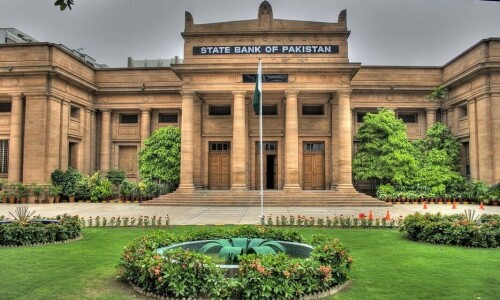
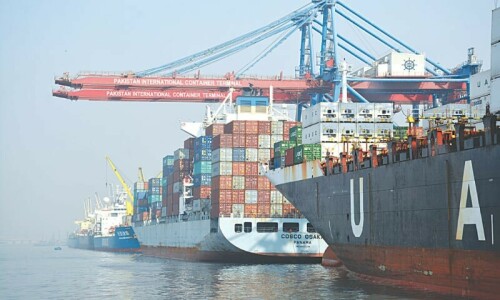
The World Bank on Tuesday sharply lowered Pakistan’s current-year growth forecast, saying the country’s economic growth prospects have weakened due to tighter financial conditions and limited fiscal space.
The World Bank now expects Pakistan’s economy to grow 0.4 per cent in the current year, from its October forecast of 2pc growth. The bleaker forecast assumes an agreement is reached with the International Monetary Fund (IMF) for bailout funds, it said.
The country’s fiscal year starts in July and runs through June. The economy is expected to grow 2pc in FY23, however, State Bank of Pakistan (SBP) Governor Jameel Ahmad said in January the growth forecast could face downward pressure.
Pakistan has been in economic turmoil for months with an acute balance of payments crisis while talks with the IMF to secure $1.1 billion in funding as part of a $6.5bn bailout agreed upon in 2019 have not yet yielded fruit.
Lower economic output and high prices have led to stampedes and looting at flour distribution centres set up across the country.
“Elevated global and domestic food prices are contributing to greater food insecurity for South Asia’s poor who spend a larger share of income on food,” the bank said.
The World Bank lowered its 2023 regional growth forecast to 5.6pc from 6.1pc in October.
“Rising interest rates and uncertainty in financial markets are putting downward pressure on the region’s economies,” the report said.
Most countries have raised interest rates at a rapid pace since the war in Ukraine last year led to choking supply chains and stoked inflation globally.
The World Bank forecast Sri Lanka’s economy will contract by 4.3pc this year, reflecting the lasting impact of the macro debt crisis, with future growth prospects heavily dependent on debt restructuring and structural reforms.
Sri Lanka follows the calendar year. In January, President Ranil Wickremesinghe said Sri Lanka’s economy could contract by 3.5pc or 4pc in 2023 after shrinking by 11pc last year.
Inflation in South Asia is set to fall to 8.9pc this year, and to below 7pc in 2024, the World Bank said.
The World Bank also lowered its forecast for India’s economic growth in the current fiscal year that started on April 1 to 6.3pc from 6.6pc as it expects higher borrowing costs to hurt consumption.