Pakistan’s recent inflation rate has significantly concerned the government and the general public. Inflation is defined as the rise in the general price level of goods and services over a particular period.
Several factors have contributed to inflation in Pakistan. Firstly, the country has been facing a balance of payments crisis, leading to a devaluation of the Pakistani rupee.
As a result, the prices of imported goods have increased, leading to an increase in the general price level. Secondly, the country is heavily reliant on oil imports, and the rise in oil prices has also contributed to inflation.
Inflation in Pakistan continues to rise, with the latest official figures putting the consumer price index at 35.4pc on a year-on-year in March 2023, compared to the increase of 31.5pc in the previous month and 12.7pc in March 2022. The multi-decade-high rate is primarily driven by soaring food and fuel prices.
In particular, the prices of vegetables, meat, and other food items have seen significant increases in recent months, with several factors contributing to the rise.
These include a weaker rupee, supply chain disruptions caused by pandemic-related restrictions, and higher production costs for farmers.
With Eid around the corner, there seems little hope that the happy occasion will be celebrated with new clothes and gifts as the lower-income groups struggle to buy simple food items amid the high inflation rate
Meanwhile, fuel prices have also been rising due to global crude oil prices, which have climbed to levels not seen since before the pandemic. And with Pakistan heavily reliant on imported oil, this has led to higher costs for businesses and consumers alike.
As a result, the government has taken steps to combat inflation, such as increasing interest rates.
Inflation is among the most pertinent issues affecting Pakistan’s economic stability. The resultant effect of inflation is the reduction of the purchasing power of money.
Given that people cannot acquire sufficient goods and services for their wants despite having previously adequate money, inflation is a thorn in the flesh of most consumers.
Pakistan has endured persistent inflationary pressure for years, which has had substantial ramifications on various aspects of the economy, including jobs, living standards, and social unrest.
In the last fiscal year (2022-2023), Pakistan’s economy has been struck by high inflation rates that have forced policymakers to take decisive steps. The country is currently battling with double-digit rates, forcing people to bear rising living costs.
Meanwhile, the government’s policies and actions, such as increasing taxes and borrowing, have contributed to inflation.
Moreover, the shortage of electricity and gas, along with other essential resources, has impacted production capacity and led to higher manufacturing costs, ultimately translating into higher prices for end consumers.
Lastly, the social and political unrest in the country has also led to a decrease in foreign investment, causing economic instability and inflation.
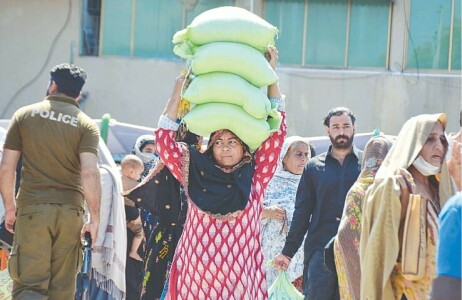
The pain of inflation is exacerbated during the holy month of Ramzan when many items of daily consumption experience price hikes. The brunt of it is borne by the lower classes, that are finding it increasingly hard to put enough food on the table for their families.
As the government doles out rations and wheat, the increase in the incidence of stampedes and deaths indicates the desperation of the masses as they try to eke out a survival.
As the International Monetary Fund continues to drag its feet to release the long-promised tranche, friendly countries are less inclined to aid Pakistan. As a result, the economic conditions in the country continue to deteriorate.
With Eid around the corner, there seems little hope that the happy occasion will be celebrated with new clothes and gifts as the lower-income groups struggle to buy simple food items amid the high inflation rate.
The writer is a student at Greenwich university
Published in Dawn, The Business and Finance Weekly, April 3rd, 2023