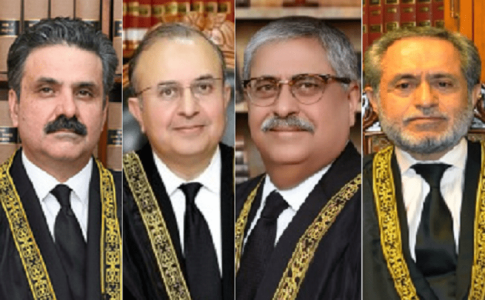
IN a reflection of the present tumultuous times, on Monday, a five-member Supreme Court bench resumed hearing suo motu proceedings to address the constitutional questions arising out of the dissolution of the KP and Punjab assemblies, and the requirement of holding elections within 90 days after the dissolution. The earlier nine-member bench had to be reconstituted after four judges dissociated themselves from the proceedings.
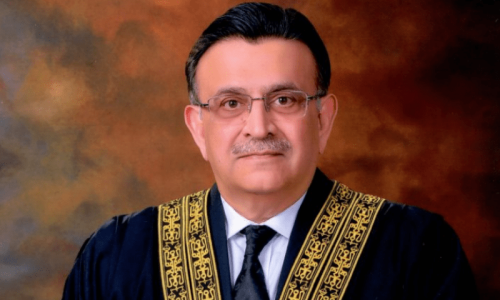
The chief justice of Pakistan had last week initiated the hearings following a deadlock between institutions in the currently toxic political atmosphere. The cold exchange between the president and the ECP had particularly exacerbated the situation, leading to the former announcing the polling dates for both legislatures. Hence the CJP’s move to address the “lack of clarity on a matter of high constitutional importance”.
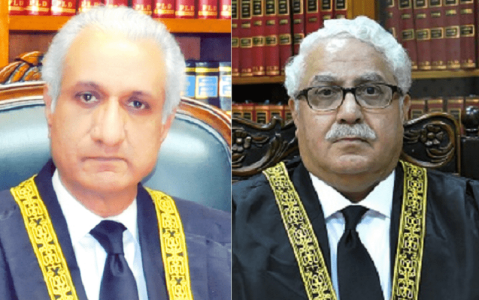
But things on the judicial front have not been smooth either, with the PDM and the Pakistan Bar Council questioning the composition of the nine-member bench hearing the suo motu proceedings and the government calling for the full court to hear the matter, minus the two judges the government parties said should not be hearing cases related to them.
Moreover, four of the judges on the bench had raised objections on various grounds through their additional notes regarding the composition of the bench. So, instead of the concerns of various stakeholders being allayed, the latest development is likely to complicate matters even more.
It is obvious that the highest court of the land must be kept above the fray and should not allow itself to be dragged into political feuds. One possible way of dealing with the current impasse and maintaining the Supreme Court’s dignity is for the full court to hear this key constitutional case (though perhaps without the inclusion of those whose actions might have been perceived as controversial).
This view is strengthened by some of the SC judges themselves, who have endorsed the need for a full court to hear a case of such crucial import. Moreover, one of the justices on the reconstituted bench had raised questions about a brother judge’s presence on the earlier bench, terming it “inappropriate”.
If this route is not possible, then the other option before their lordships could be to do away with suo motu proceedings in this case. After all, one of the judges has commented in his additional note that, with regard to the case in question, “suo motu action is not justified”.
Regardless of the outcome, constitutional requirements must be followed and not held in abeyance. If the KP and Punjab caretaker administrations feel it is unfeasible to hold polls within the 90-day deadline, then, as this paper has argued earlier, the government should consider calling early general elections so that a path out of this constitutional deadlock can be found.
Published in Dawn, February 28th, 2023