In an attempt to ease the ongoing import crisis, the State Bank of Pakistan (SBP) on Monday removed the requirement of obtaining prior approval for imports falling under HS code chapters 84 and 85 and certain items falling under HS code chapter 87 — that deal with machinery and electrical equipment — of the Pakistan Customs Tariff.
Instead, the SBP issued a general guidance to the banks to prioritise the import of certain categories such as food, pharmaceuticals, and energy.
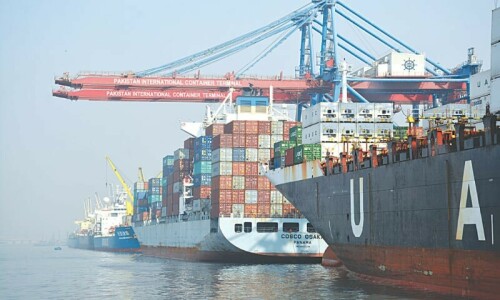
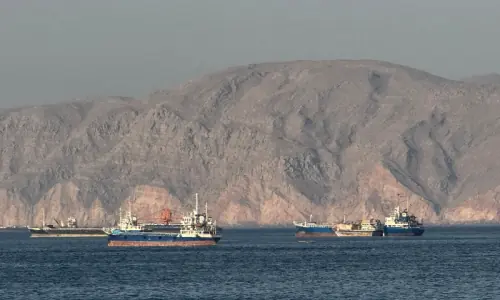
The central bank’s decision comes days after businessmen flayed SBP Governor Jameel Ahmad in a town-hall meeting for letting 5,700 containers laden with food, medicine and industrial raw materials waste away at port for months on end.
Banks have been refusing to open letters of credit (LCs) for a majority of imports under explicit directives from the SBP as the country fights a serious shortage of dollars. Minimising dollar outflows has brought a wide section of import-dependent industrial activity to a standstill across the country.
Earlier this month, the central bank had eased imports of several essential items required as raw material and some basic needs of exporters.
However, it had directed banks to prioritise imports in the following order: food and pharmaceuticals; petroleum and coal; raw material and spare parts for export-oriented industries; seed, fertilisers and pesticides; deferred payment and self-funded imports; and plant and machinery for the export-oriented projects near completion.
In a press release issued today, the SBP noted the business community’s concerns about a large number of shipping containers stuck at the port due to delays in the release of shipping documents by banks.
“SBP has advised banks to provide a one-time facilitation to all those importers who could either extend their payment terms to 180 days (or beyond) or arrange funds from abroad to settle their pending import payments.
“Accordingly, till March 31, 2023, banks have been advised to process and release documents of shipments/goods that have already arrived at a port in Pakistan or have been shipped on or before January 18, 2023,” it stated.
The SBP directed banks to advise their customers to inform them prior to conducting an import transaction to avoid complications in the future.
As the country’s foreign exchange reserves declined rapidly last year, the central bank imposed import curbs in order to minimise dollar outflows. However, this has negatively affected the industry, with large-scale manufacturing shrinking for three consecutive months. Several companies have partially suspended operations in recent weeks citing inventory shortages due to the curbs.