18
18

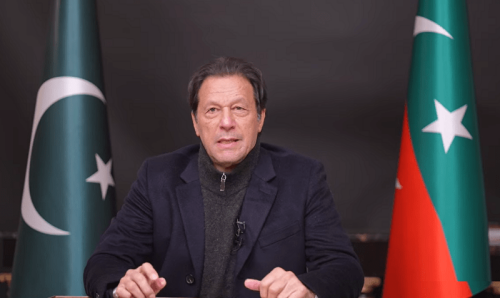
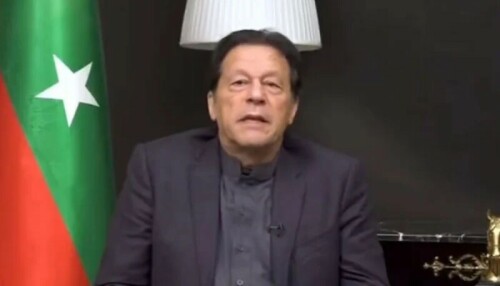
Former prime minister Imran Khan believes he is the latest target of the establishment’s version of ‘cancel culture’. Ever since the shifting sands of Pakistan’s treacherous political landscape caught up with the PTI chairman last April, he has railed against the powers that be for having pulled the rug from under his feet, or in his words, for becoming ‘neutral’.
Of late, however, Mr Khan has been alleging that these quarters are engaged in political engineering to keep him out of power, an assertion that various developments in the country appear to support.
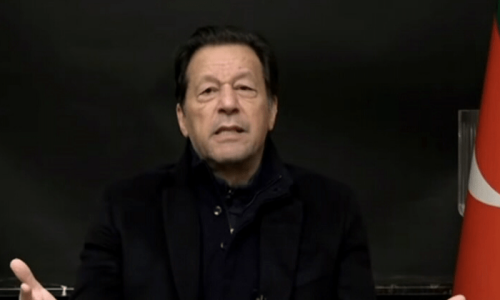
A few days ago, in the run-up to the Punjab chief minister seeking a trust vote from the provincial assembly, the PTI chief claimed his party members were being persuaded to part ways with him on the grounds that he had no political future, that he had been marked with a “red line”. Decrying as “arrogant” and lacking in political acumen those who wanted to write him off, Mr Khan vowed he would erase the barriers being erected against him with the help of his supporters. The people of this country alone, he said, had the right to place red lines on people.
The ousted PM’s assertion certainly has historical precedent in this country. Several civilian leaders have found themselves shunted into the political wilderness after falling foul of the powerful security establishment. Some managed to claw their way back, often only after compromising with the power brokers, when changing circumstances opened up the opportunity for a second (or third) act.
But Mr Khan is conveniently glossing over the bigger picture — the fact that what has happened with him is part of a wider pattern. While the ‘red line’ on the PML-N leadership was in place, Mr Khan was the beneficiary — and a very willing one at that. Who can forget the smug declarations ad nauseam of the PTI government and the establishment being on one page? Whatever his differences with the other parties, Mr Khan should know that they are all in the same boat in this respect — equally vulnerable when they cross the red lines decided upon by the powers that be. Both Benazir Bhutto and Nawaz Sharif came to this realisation in time after years of making Faustian bargains, though one might argue whether the latter has not once again taken the expedient route.
The fact is that when civilian leaders cede space, the red lines multiply and become more arbitrary, serving objectives that have little to do with national security but everything to do with protecting influential personalities and vested interests. As the media has found over the last few years, holding the authorities to account has become particularly dangerous. Every society has red lines, but they must be consistent and clearly defined.
Published in Dawn, January 16th, 2023