Pakistan seeks talks to limit arms build-up



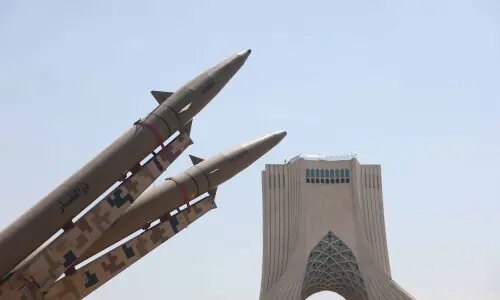
UNITED NATIONS: Pakistan urged the UN Security Council on Wednesday to support negotiations to limit and control the build-up of nuclear and conventional weapons.
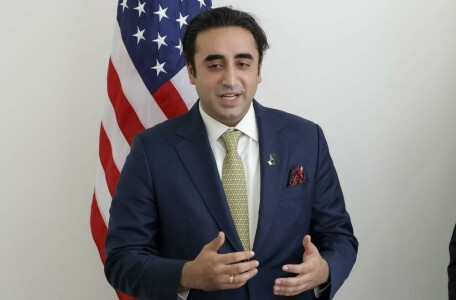
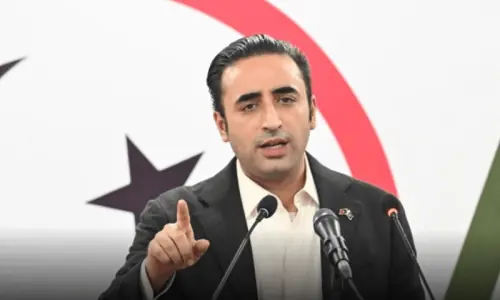
In his address to the Security Council in New York, Foreign Minister Bilawal Bhutto-Zardari also supported the call for expanding the council but opposed adding new permanent members.
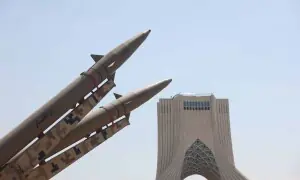
“This council should support negotiations in the relevant bodies to limit and control the nuclear and conventional arms build-up at the global and regional level, including the development and deployment of new weapons and military technologies,” he said.
The nuclear weapons states, he said, must provide binding assurances to non-nuclear states against the use or threat of use of nuclear weapons.
Bilawal supports call for UNSC expansion, but opposes adding new permanent members
The foreign minister was responding to a concept note, circulated by India that presides over the current session of the UN Security Council, which is debating new orientation for reformed multilateralism.
Indian Minister for External Affairs S Jaishankar, who addressed the council before his Pakistani counterpart, launched a veiled attack on both China and Pakistan, accusing them of “misusing multilateral platforms” to promote their interests.
“Even as the world is coming together with a more collective response, multilateral platforms are being misused to justify and protect perpetrators of terrorism,” he claimed. This was an apparent reference to China, which has blocked several attempts by India to use the UN platform for defaming Pakistan.
On Tuesday, UN Secretary-General’s Spokesman Stephane Dujarric urged both China and India to ease tensions along the Sino-Indian disputed Himalayan border, after New Delhi claimed its troops clashed with Chinese troops last week.
Mr Bhutto-Zardari, however, underlined the need to expand, not restrict, multilateralism, as India had suggested. One worthy multilateral task for the world body would be to limit the use of lethal weapons, he said.
“New and lethal weapons which can cause massive and indiscriminate suffering, or which lowers the threshold of conflict, should be prohibited,” the foreign minister added.
“Discrimination in the peaceful uses of nuclear and other technology should be eliminated. The aim must be to assure equal security for all States,” as agreed at the first UNGA special session on disarmament, he said.
The UN General Assembly, he noted, was the most universal global forum and therefore it must play a central role in reinforcing multilateralism and enhancing equity and justice in international relations.
“The world’s attention must also turn away from pursuing narrow national ambitions to addressing the several global threats and challenges we confront: climate change; the nuclear threat; terrorism; refugees and migration; famine and hunger; the misuse of the metaverse,” Mr Bhutto-Zardari said.
“Multilateralism” must be based on universal and consistent adherence to the fundamental principles of the UN Charter — self-determination of peoples, non-use or threat of force, non-acquisition of territory by the use of force, respect for the sovereignty and territorial integrity of States and non-interference in their internal affairs.”
The minister also highlighted the need to democratise the structures of global financial and economic governance, especially the Bretton Woods institutions such as World Bank and IMF.
On Tuesday, the IMF rejected a request from mid and lower-income countries, like Pakistan and Argentina, not to collect surcharge on its loans, providing those countries more space to rebuild their troubled economies.
Mr Bhutto-Zardari noted that for over 20 years, the UN General Assembly has been engaged in efforts to reform of the Security Council through an expansion in its membership and equitable representation of UN member states.
There are differences within the United Nations on issues like the size of an expanded Council; categories of membership; the use of the veto; regional representation and the working methods of the Council.
“Agreement can be reached if all the parties concerned display flexibility and mutual accommodation,” said the foreign minister while urging the UN members not to “advance national ambitions of a few large countries. This was an obvious reference to India, which wants to become a permanent member with veto powers. But Mr Bhutto-Zardari reminded the world body “the addition of new permanent members will further complicate the ability of the Council to take timely decisions and defeat the objective of equitable representation of all member states”.
Published in Dawn, December 15th, 2022