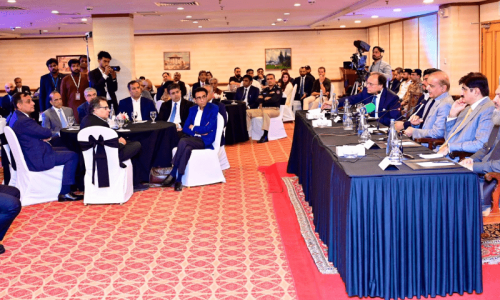
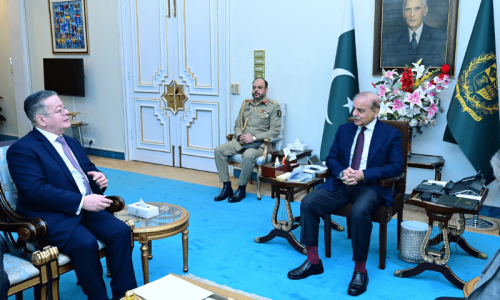
WITH the country confronting one of its gravest economic crises, it is time for the government and business community to sit together and find a way out of it and build a strong, resilient economy. Prime Minister Shehbaz Sharif took the initiative when he met prominent Karachi business leaders on Wednesday to solicit their support for the government’s efforts to revive the moribund economy.
“Today we need you to take a step forward and bring this rental business to an end. Let’s focus on genuine industrial and agricultural growth to double exports in the next five years. It’s difficult but not impossible,” he told them.
He also referred to Bangladesh’s economic success and how that country had transformed its economy, even though it was once considered a ‘burden’ on West Pakistan before secession. He promised to incorporate the business community’s recommendations in a comprehensive economic growth roadmap.
However, the community had its own apprehensions. It highlighted three major areas it considers important for economic revival: restoration of severed trade relations with India, resolution of domestic political instability in the country by engaging the incarcerated PTI leader Imran Khan, and reduction in their cost of doing business through a decrease in energy prices for manufacturing. There is no doubt that these issues are impeding a positive business clime, which is required to boost private investment and economic growth. However, both the government and business community must jointly work their way around these obstructions to steer the economy out of its present crisis.
Consider the call for the normalisation of trade relations with India, for example. The present political dispensation might face resistance from some quarters towards any effort in this direction. But this should not stop the government from taking steps, no matter how small, towards reducing tensions with India, in spite of the huge difficulties involved, especially with New Delhi’s hostile stance under Narendra Modi.
The PML-N leadership has expressed its desire to improve bilateral cooperation for economic progress, which could have a positive impact on overall South Asian economic cooperation. Likewise, the issue of reconciliation with Mr Khan is a tricky one. So far, Mr Khan has not shown any inclination to talk to political rivals, though he does not appear too averse to a compromise with the powers that be. Lastly, the demand for lowering energy rates for industry is hard to meet as long as Pakistan remains in an IMF stabilisation programme.
Business conditions are indeed very difficult. But should businessmen wait for better times instead of helping the government find a way out of the current mess? Finally, there are other issues such as policy inconsistency and a narrow tax base whose resolution can uplift business conditions if the business community decides to work with the government.
Published in Dawn, April 26th, 2024