0
0

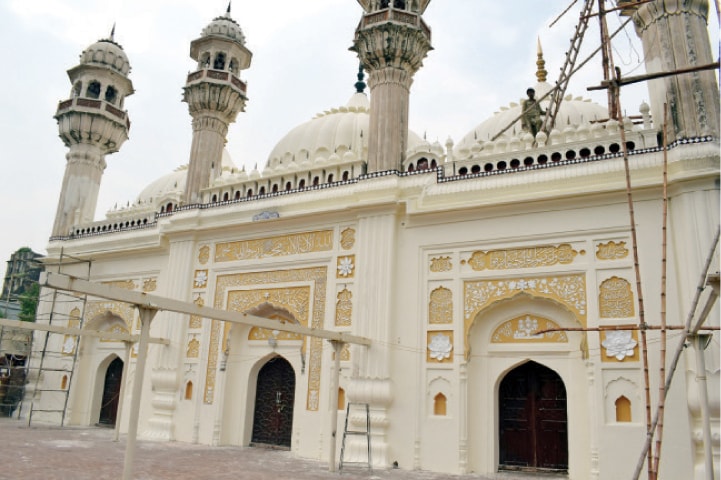
TAXILA: In a lush green valley surrounded by gardens and sparkling springs, a finely intact Mughal-era mosque is testimony to the ecological reverence observed by architects of the time as they designed their structures.
The Potohar region is filled with similarly unique historical places that trace back to Buddhist, Mughal, Sikh, Hindu and Muslim culture. The mosque, located in Wah village, was erected upon a three-domed structure, flanked by four minarets which appear to have been added much later. This mosque has a unique and un-matched architectural significance as its interior is decorated with stucco, murals and calligraphy. Three arched entrances lead to the main prayer hall.
The arch entrances are adorned with Quranic verses. The mosque’s domed ceiling bears haft rang (seven colours) patterns which were a known peculiar style of Mughal painters. This style was introduced in the region by artists who came from Persia at that time. Later on, it was also used in tile mosaics.
The interior wall depicts floral and geometric designs. On some patterns, glass pieces were added to make the design more perceptible.
Residents of the area restored the decoration inside the mosque and old patterns were filled with fresh colours. Masons were brought from various parts of the country especially South Punjab, who repaired the mosque and repainted the same designs by reproducing old patterns on tracing papers.
“The Wah village, where the mosque was built, belongs to the warrior clan of Khattars, who accompanied Sultan Mehmood Ghauri in his successful invasion of India from Central Asia,” said Raja Noor Mohammad Nizami, a historian.
He said this most notable and magnificent mosque was built during the reign of Emperor Akbar. He was of the view that as per the available historical evidence, this mosque was believed to have been built by Akbar (1556-1605) and later renovated by Emperor Jehangir (1605-1627).
A.G. Lone, an archaeologist and former curator of Taxila Museum, said many mosques built during the Mughal-era have lost their original architecture due to constant repairs.
While commenting on the significance and importance of the Wah mosque’s interior, he said although there are various domed mosques in Potohar, decorated with beautiful murals and stucco decoration, they were all built during the Sikh and British periods.
According to Qari Mohammad Sajid, maintenance work on the structure was carried out so that facilities could be improved but originality of the design was kept intact. He said worshippers perform ablution in the mosque with spring water passing through it, where water is said to be chilly during summer and normal during winter.
It is high time that the authorities concerned enlisted it as a historical monument, keeping in view its significance and importance.
Published in Dawn, November 7th, 2022