US ‘confident’ Pakistan’s nuclear assets are secure


 111
111


The United States has said that it is confident of Pakistan’s ability to keep its nuclear assets safe and secure, dismissing speculations stirred by President Joe Biden’s off-the-cuff remarks about the country’s nuclear programme.
“The United States is confident of Pakistan’s commitment and its ability to secure nuclear assets,” US State Department spokesperson Vedant Patel told journalists in Washington shortly after a meeting between Ambassador Masood Khan and Counselor Derek Chollet.
Chollet, a senior advisor to US Secretary of State Antony Blinken, was the first to break the news of the meeting, which came days after the Pakistan Foreign Office summoned the US ambassador in Islamabad to protest over President Biden’s remarks.
Chollet said in a tweet that he met Ambassador Khan “to discuss US-Pakistan long-standing partnership and (to) further grow our ties in so many areas including health, agriculture, education, entrepreneurship, energy and more for the benefit of our peoples and the region”.
The counselor’s tweet forced the Pakistan embassy to acknowledge the meeting in a press release that not only borrowed Chollet’s statement, but also included contents from the daily news briefing.
Ambassador Khan posted a tweet as well, thanking Counselor Chollet for his constructive role, and stated that he had discussed with him “ways to build further resilience in Pakistan-US relations and boost strategic trust between the two countries”.
Khan expressed confidence that through high-level visits, people-to-people exchanges and effective communication, “bilateral relations would continue to be fortified.”
The issue resurfaced at the State Department’s daily news briefing on Monday afternoon when a journalist asked Principal Deputy Spokesperson Vedant Patel to clarify the doubts created by President Biden’s remarks.
Situationer: Why is US airing nuclear concerns now?
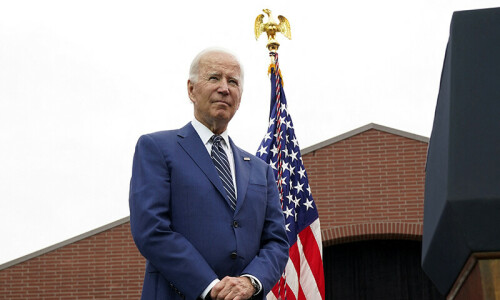
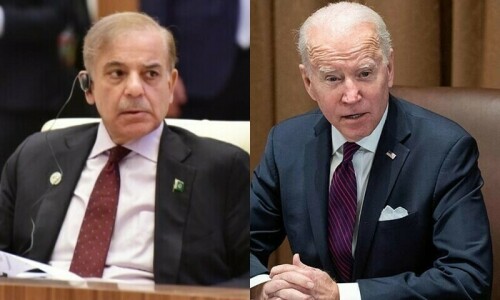
While addressing a Democratic fundraiser in California on Thursday, President Biden surprised everyone with his off-the-cuff remarks about Pakistan. “What I think is maybe one of the most dangerous nations in the world: Pakistan,” he said. And then he explained why he thought Pakistan was dangerous: “Nuclear weapons without any cohesion.”
His remarks stirred a storm in Pakistan where both opposition and government leaders condemned his comments and reiterated Islamabad’s position that Pakistan has a robust command and control system and its nuclear assets were completely safe.
The White House responded promptly, assuring Islamabad that “the president views a secure and prosperous Pakistan as critical to US interests.”
Spokesperson Vedant Patel, however, gave a more detailed explanation on Monday afternoon, saying: “the US has always viewed a secure and prosperous Pakistan as critical to US interests. And more broadly, the US values our long-standing cooperation with Pakistan.”
The two countries “enjoy a strong partnership”, said the State Department official, adding that Pakistan’s Foreign Minister Bilawal Bhutto-Zardari visited Washington recently where he met Secretary Blinken as well.
He recalled that Counselor Chollet also visited Karachi and Islamabad during the floods, as did USAID Administrator Sam Power.
“So, this is a relationship we view as important, and it’s something that we’re going to continue to remain deeply engaged in,” said Patel, pointing out that US and Pakistani officials meet regularly.
But when the journalist insisted on a response to his question about President Biden’s remarks, the US official said: “I don’t have any specific conversation to read out, but the United States is confident of Pakistan’s commitment and its ability to secure its nuclear assets.”