THE PM Office needs pest control, as well as a good plumber or two. The place appears to have had a bug problem for months, if not years, and private conversations held inside its usually secure walls are now casually leaking into the public domain.
Starting on the weekend, a steady drip of audio clippings had put the incumbent government in an embarrassing spot; yesterday, the equation was balanced with a leaked audio featuring former prime minister Imran Khan and his principal secretary, Azam Khan, strategising their moves on the so-called Cablegate affair.
The Imran Khan leak added an interesting dimension to the controversy raging over this serious national security breach: it is now clear that the PM Office had been under illegal surveillance for longer than just one brief period. Clearly, the Intelligence Bureau miserably and repeatedly failed in its sworn duty to secure the facility and protect the prime minister.
To a casual observer, it would be a little perplexing why no one has so far bothered to blame the leaks on a foreign conspiracy. To others more familiar with the underbelly of Pakistani politics, it is clear why they have not: these leaks look more like an inside job than the work of a foreign power. They have confirmed for civilian leaders something they had always feared: no matter how far one rises in the pecking order, they are not safe from surveillance.
Editorial: Biggest question in audio leaks saga is how security lapse of such grave proportions happened
The blame ultimately rests with our own security apparatus — whether for failing to remove the bugs or for failing to prevent private conversations recorded inside the chief executive’s office from becoming a national and international spectacle. The entire saga has demeaned the office of the prime minister of Pakistan and reduced its standing.
Whatever the investigation into the matter concludes, there should be severe penalties for all those found responsible, in order to make sure something like this will never happen again.
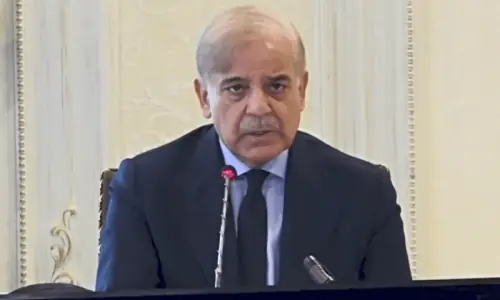
Prime Minister Shehbaz Sharif had remarked on Tuesday that foreign dignitaries would be “apprehensive and uncomfortable” in their interactions with locals if official buildings were expected to be bugged. The prime minister should perhaps also have given some thought to government functionaries: how will they work freely if they are always watching over their shoulders?
If the events of the past year have taught anyone anything, it is that, regardless of what position you take on the political divide, you cannot expect the interests of the ‘establishment’ to always remain aligned with your own.
According to the press release issued after Wednesday’s National Security Committee, the government has been given a briefing on “cyberspace”, and a “legal framework for cybersecurity” is being prepared to prevent another ‘incident’. One hopes that the measures being taken will be considerably more substantive than the word salad the government has issued.
Published in Dawn, September 29th, 2022