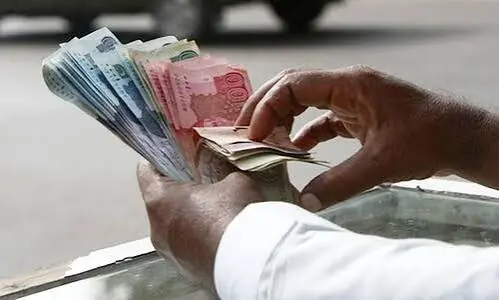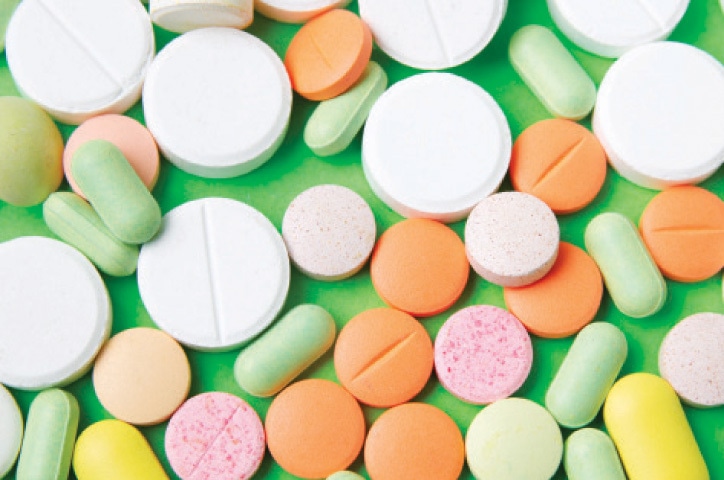
A pharmacist sticks a piece of white tape on a medicine box. Coolly, he pens the price at which he will be selling the drugs.
The Drug Regulatory Authority of Pakistan (Drap) fixes the maximum retail price at which a medicine is allowed to sell officially. But there is nothing much stopping retailers from charging a higher price if market forces allow it, which they do.
Less compliant than their foreign counterparts, local companies find it easier to survive in Pakistan’s pharmaceutical sector while the multinational exodus has accelerated in recent years. Sanofi Aventis Pakistan limited has exited, selling its plant to local companies and Bayer is closing up shop as well, confirms Pharma Bureau Executive Director Ayesha Tammy Haq of the Overseas Investors Chamber of Commerce & Industry.
Regime changes and the spiralling economic crisis have not been kind to the sector.
As the economic crisis worsens along with regulatory challenges, multinationals find it expedient to close shop
Sales tax saga
“Sales tax has not been reduced, sales tax has been imposed,” says Ms Haq, clearing up a misconception. “Previously, the pharmaceutical industry was exempted from sales tax. In January this year, PTI imposed 17 per cent sales tax solely for documentation purposes that was to be refunded in its entirety.” Hitherto, pharma did not pay sales tax on active pharmaceutical ingredients (API) or other raw materials, only on packaging materials.
As expected, the money has not been refunded causing cash flow problems. The current government reduced the 17pc (refundable tax) to 1pc non-refundable tax, imposed at different stages. So the ‘reduction’ in sales tax was leading to an increase of 6-9pc in cost which could not be passed on to the final consumer because of Drap’s restrictions.
This, along with the 4x increase in shipping charges and the continual devaluation of the rupee skyrocketed the price of APIs and other materials, jacking up costs for an industry that cannot officially pass the increase on to the consumer.
Hence, the friendly neighbourhood pharmacist and his handy white tape to increase the price because his margins are being squeezed by the companies.
The government has agreed that the situation is untenable for companies to operate in and has made the usual promises to fix the situation that had not been implemented till the writing of this article. If implemented, the 1pc sales tax on APIs will be scrapped. There is a refundable (for pharma companies only) 17pc tax on consumed excipients (binding agents, coating agents etc) because it is used for industries other than pharma as well. The tax on packaging continues as before.
At the cost of life-saving medicines
“The situation is really dire. There is no money in the economy and the amount of LCs [letter of credit] is restricted to $100,000 per day. So how do you import life-saving cancer drugs which are really expensive? There is no governor of State Bank,” says Ms Haq in exasperation, pointing out the need for monetary management of the economy.
“For god sake, we are bringing in medicines not luxury items like a car! You have to remove these restrictions,” she laments adding that the government is fabulous about hearing out their complaints but decidedly less so about implementing agreed-upon changes.
Not commenting on hoarding practices, Ms Haq said the MNCs were continuing to manufacture medicines without shortages, other than the usual quota issues.
“There was a dearth of psychotropic drugs (antidepressants, anti-anxiety medications, stimulants, antipsychotics, and mood stabilisers) because it took so long for the government to release the quota that the industry did not have ingredients to make them; we go through this every single year. People weep and cry about shortages but nothing changes.”
Imported finished medicines face their own set of challenges since C&F [cost and freight] is 90pc of its cost. The pricing formula for finished medicines is C&F plus 40pc which gives the MRP of a drug, explains a local manufacturer.
That MRP includes the discount to retailers, transportation costs, warehousing, staff roll, etc. In the end, the margin is a measly 5pc which is eroded by currency fluctuations. Thus retailers increase the price at their discretion.
Created compliance challenges
“The bottlenecks for LCs have increased. Previously, what took two days is now taking over two weeks in the name of compliance,” says a local source requesting anonymity.
“Our supplier is in Dubai and our bank asked us to get passport copies of the owners,” he says. “The supplier thought we were crazy.” Allegedly, this is under the direction of State Bank which has requested banks to squeeze dollars going out.
Published in Dawn, The Business and Finance Weekly, July 25th, 2022