0
0

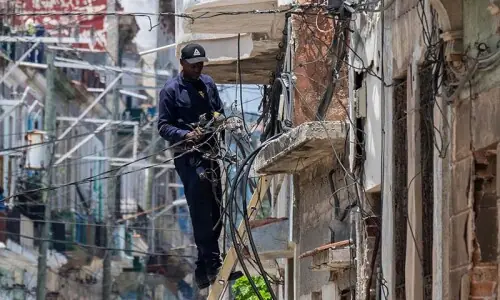
HYDERABAD: Prolonged power breakdown in lower Sindh region dependent on the Hyderabad Electric Supply Company (Hesco) has affected entire region since Sunday morning in the wake of widespread rainfall.
It also led to water shortage as well as suspension of drinking water supply for considerable time.
Hesco spokesman Sadiq Kubar claimed on Sunday that that power utility had closed 207 feeders out of its total 570 feeders in the morning. Of them 121 feeders supplied electricity to Hyderabad city but 56 had to be closed as precautionary measures around morning prayers.
Hesco chief executive officer Noor Ahmed Soomro had visited Power Dispatch Centre (PDC) to review the situation in the evening. The CEO called for ensuring proper electricity supply to all the areas.
Rainfall was reported in Sanghar, Badin, Thatta, Sujawal, Matiari, Tando Mohammad Khan.
Sindh Irrigation Minister Jam Khan Shoro, who was Sindh Assembly member from Qasimabad, visited different rain affected areas with Hyderabad deputy commissioner, Fuad Soomro, who held additional charge of director general of Hyderabad Development Authority (HDA).
Irrigation minister asked district administration to take immediate steps for draining out rainwater from all parts of the city and directed the administration to ensure availability of relevant staff and machinery in heavy monsoon rains.
The minister visited Latifabad units-2 and 11, Qasimabad, Thandi Sarak, Shahbaz Building and other main areas. DC Soomro briefed him about issues in disposal of rainwater. He told the minister that around four to give hours were needed after rains to clear rainwater on roads.
The rainwater enters drainage system of Water and Sanitation Agency through drains and then it was disposed of. DC said that disposal was affected due to non-availability of electric supply.
DC told Dawn that Poly-2 feeder of Hesco remained badly affected. It was without power supply since morning. Likewise, L-7 and L-8 feeders could not be energised till Sunday night.
He said that Paretabad and Noorani Basti pumping facilities were without electric supply. “This all affected drainage of rainwater in the city and Latifabad,” he said. He added that only Tulsi Das pumping station had luckily comparatively better electric supply.
Water supply was ensured from Wasa’s filtration plants in Latifabad, Hussainabad, Jamshoro road and Paretabad but these facilities were facing frequent power outages, affecting entire cycle of drinking water supply to the city.
Published in Dawn, July 25th, 2022