IT is a conversation that must take place if extremism is not to consume Pakistani society from within, but is the country’s leadership prepared to engage in it? An honest appraisal of how we have arrived at a point where even a non-Muslim foreigner can be lynched on an accusation of blasphemy, requires a willingness to acknowledge a monumental failure of both policy and moral courage.
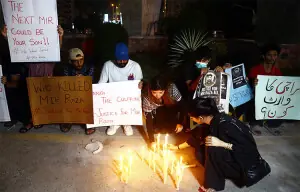
On Friday, PTI leader Dr Babar Awan tabled a resolution in the National Assembly for holding a debate on the Sialkot tragedy in which Sri Lankan national Priyantha Kumara was beaten to death by a mob for allegedly committing blasphemy. He was of the view that the penal system needed to be improved so that those guilty of violent crimes could not take advantage of loopholes or flaws in the system to escape punishment. In the Senate the same day, and with reference to Mr Kumara’s slaying, the government and the opposition also discussed the need to revamp the criminal justice system.
Read: Sialkot no surprise
However, extremism in the country has gone well beyond a law and order problem. The poison of divisive rhetoric has percolated into the warp and weft of society. Its triumphalist mindset manifests itself in myriad ways, some of them seemingly innocuous, while others are more overt. But they all add up to an environment where matters of faith can provide a spark for a conflagration that does not spare even the mentally handicapped.
Less than a week before Mr Kumara’s murder, between 4,000-5,000 people attacked a police station in Charsadda, KP, demanding that the cops hand over a mentally unstable man taken into protective custody when he was accused of committing blasphemy. When Asiya Bibi was acquitted of the crime by the Supreme Court after having spent eight years on death row, riots led by the Tehreek-i-Labbaik Pakistan broke out across the country in protest against the verdict.
The state is entirely to blame. It deliberately steered society onto a right-wing trajectory for its own ends, turned a blind eye to those that incited violence against fellow Pakistanis, and extended kid glove treatment to individuals who acted on extremist beliefs. Even now, eight years after the APS Peshawar massacre led to the National Action Plan being devised to counter violent extremism, but which was hardly acted upon, the government is engaged in talks with the TTP, the very group that perpetrated that atrocity.
Now and then, banned groups surface to hold press conferences/rallies against women’s rights, etc; hundreds of individuals affiliated with proscribed extremist groups stood as candidates in the 2018 election. Politicians of all shades, including otherwise progressive ones, have used accusations of blasphemy to intimidate rivals — the ultimate trump card in a reactionary society. Extremism has been mainstreamed and normalised. Until this mindset changes, there will inevitably be more Priyantha Kumaras.
Published in Dawn, December 27th, 2021