IT’S a hallmark of the times we live in that we must document everything we do; from vacations to functions and events — down to our breakfasts, lunches and dinners — everything must be videotaped and photographed and then tweeted, Facebooked or Instagrammed for the approval of others. The same apparently applies to murder by mob.
Last week, Priyantha Kumara, a Sri Lankan manager at a local factory in Sialkot was murdered by a mob that had accused him of blasphemy. Kumara had been living and working in Pakistan for over a decade, a living embodiment of Prime Minister Imran Khan’s dream of a Pakistan where foreign nationals flock to find work (his arrival predates the onset of the glorious tabdeeli revolution, but the point stands).
First, he was stripped naked and beaten to death, with a crowd of hundreds gathering around and raining blows on his dying body. His mutilated corpse was then set on fire and, afterwards, the killers cheerfully admitted their crime in front of TV cameras, proudly claiming to have sent a blasphemer to hell.
Editorial: It is indeed a day of shame for Pakistan
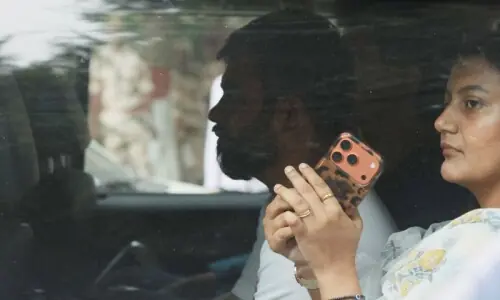
After that, it was selfie time, and one of these pictures stands out in particular. A young man, his face a picture of concentration, stands in front of Kumara’s burning corpse. His eyes are narrowed and serious, possibly due to the solemnity of the occasion, or maybe as a reaction to the thick smoke — made oily by melting fat — of this righteous human bonfire. And on the back cover of his mobile phone are written the lyrics of a song from the Bollywood film Gully Boy: ‘Apna Time Ayega’ (my time will come). Nothing rings truer than that: this is indeed his time and the time of all those like him — people who will commit atrocity on the merest rumour, who will eagerly join a murderous mob for the fleeting feeling of solidarity and the sense of being a soldier for righteousness in a greater, cosmic war.
We do not have the right to be shocked.
And while we get to be angered by what happened and are allowed to feel a sick nausea in the pit of our stomach and a despair that crushes whatever semblance of a soul we still have left … we do not have the right to be shocked because even the most blissfully benighted of us could see this coming. There is no point repeating the long and well-documented tale of surrenders, co-opting and cruel cynicism that led us here.
Read more: No one is responsible for lynching the Sri Lankan national in Sialkot. Absolutely no one
The official reaction was intense: the highest functionaries of the state all chimed in to condemn the murder, even if their choice of words was revealing. The terms ‘vigilante’ and ‘extrajudicial’ were used, along with calls for people to not ‘take the law into their hands’ which, interestingly enough, seem to imply that some form of crime was actually committed and that the real problem was that the mob passed sentence before the state could.
I understand the compulsion and the need for guarded language — something which of course doesn’t apply when heaping calumny on political opponents — because God forbid they themselves should be seen as (gasp) defending a blasphemer and thus be labelled blasphemers themselves. Once that label sticks, no amount of performative state-sponsored religiosity and faux piety will peel it off.
Nevertheless, the powers that be can now breathe a sigh of relief as it has — no surprise — emerged that Kumara’s sin was that he removed a TLP sticker from factory machinery prior to a visit from international clients. There’s also speculation that, like the case in Khushab where a bank guard killed his manager over a work dispute and belatedly claimed that the manager was a blasphemer, Kumara was killed because of a dispute he had with factory workers.
With that out of the way, I’m sure the official condemnation will be even more vociferous now, due also in no small part to the fact that this time the blasphemy brigade has claimed the life of a foreign national from a friendly country. After all there’s this geo-economic reset to think about.
We’ll see the truth of this soon enough when the next Pakistani — be he or she Muslim, Hindu, Christian or otherwise — is lynched in the name of blasphemy. Because that’s going to keep happening no matter what becomes of those arrested in the Sialkot lynching. You know it, and I know it too. And if you believe otherwise, you may as well try to cure cancer with dispirin. Make no mistake; there will be several thousand more Kumaras and Mashals before this runs its course, if it ever will. And let’s face another fact. It won’t end. Why should it?
Read more: The Sialkot lynching is another reminder that sanity and our blighted land have parted ways
And in no time at all, we will revert to type. We will be treated to moralistic lectures on family values and the evils of khooni liberals (all 12 of them) who are working day and night to destroy this country. After all, we are experts in treating the symptoms while promoting the cause of the disease.
The writer is a journalist.
Twitter: @zarrarkhuhro
Published in Dawn, December 6th, 2021