5
5

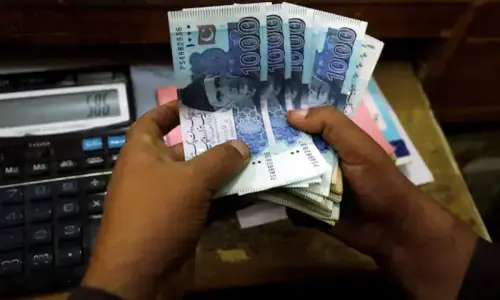
THE Sindh government’s decision to collect two municipal taxes through electricity bills from consumers only in Karachi is likely to be seen as discrimination by the dwellers of the megacity. In its attempt to make the Karachi Municipal Corporation financially strong, the provincial government earlier this month proposed the collection of conservancy and fire taxes through K-Electric bills from consumers in Karachi. According to the details, Rs100 and Rs200, respectively, will be charged from two categories of 2.56m electricity consumers in the city. It is believed that this will enable KMC recoveries to increase drastically — up to Rs9bn per year as compared to the present collection of Rs210m from these two taxes. The Sindh government took a similar step earlier this year in February when it mandated the Sindh Revenue Board to collect local taxes on KMC’s behalf. Though these taxes are not new, it is too early to say whether their collection through electricity bills will prove effective. Part of the reason is that the authorities have not yet made available the details of the two categories of consumers mentioned.
Meanwhile, even if the financial targets are met, it is unclear how the money raised will be used to improve civic facilities in Karachi. The 20m-plus people of Karachi, whose large, medium and small businesses drive the country’s economy, are left to cope with natural and manmade disasters practically on their own. Certainly the comatose KMC seems to be providing little to no civic amenities. Secondly, the same PPP leadership that now appears so concerned to prop up KMC was the same one that originally stripped the body of many of its powers. Moreover, why shouldn’t the same methods be employed to boost tax collection via municipal bodies in other cities of the province, including Hyderabad, Sukkur and Larkana? Will financial autonomy for these municipal bodies not benefit the Sindh government too? Taxing is essential but its application needs to be fair across all settings, rich or poor, urban or rural.
Published in Dawn, September 28th, 2021