Twin suicide blasts in Baghdad leave 32 dead, 110 wounded


 18
18


A rare twin suicide bombing killed more than 30 people and wounded 110 others at a crowded market in central Baghdad on Thursday, the Iraqi health ministry said, the city's deadliest attack in three years.
At least 32 people were killed and another 110 wounded in the attack amid stalls hawking second-hand clothes in the Iraqi capital's Tayaran Square.
The market had been teeming with people after the lifting of nearly a year of restrictions imposed across the country in a bid to halt the spread of Covid-19.
According to an interior ministry statement, the first suicide bomber rushed into the market, claiming to feel sick.
Once a crowd of people had gathered around him, he detonated his explosives.
As people then flocked around the victims, a second attacker detonated his bomb, the ministry said.
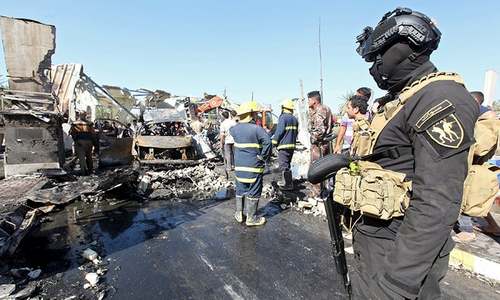
An AFP photographer at the scene said security forces had cordoned off the area, where blood-soaked clothes were strewn across the muddy streets.
Paramedics were working to remove casualties, and Iraq's health ministry said it had mobilised medics across the capital.
Thursday's attack was the bloodiest incident in Baghdad since January 2018, when a suicide bomber killed more than 30 people in the same square.
Suicide bombings had been commonplace in Baghdad during the sectarian bloodletting that followed the US-led invasion of 2003.
Later on, as the Islamic State group swept across much of Iraq, its jihadists also targeted the capital. But with the group's territorial defeat in late 2017, suicide bombings in the city became rare.
Baghdad's notorious concrete blast walls were dismantled and checkpoints across the city removed.
'Despicable act'
President Barham Saleh led political figures in condemning Thursday's attack, saying the government would “stand firmly against these rogue attempts to destabilise our country”. United Nations' Iraq mission (UNAMI) also offered condolences to the victims.
“Such a despicable act will not weaken Iraq's march towards stability and prosperity,” UNAMI said in an online statement.
Thursday's attack comes as Iraqis prepare for an election, events often preceded by bombings and assassinations.
The 2018 attack took place just a few months before Iraq's last round of parliamentary elections.
Prime Minister Mustafa al-Kadhemi had originally set this year's general election for June, nearly a year ahead of schedule, in response to widespread protests in 2019.
But authorities are in talks over rescheduling them to October, to give electoral authorities more time to register voters and new parties.
Thursday's twin attack was not immediately claimed but suicide bombings have been used by jihadist groups, most recently IS.
The jihadist factions seized a third of Iraq in 2014 and was dangerously close to the capital, but a ferocious three-year fight by Iraqi troops pushed them back. Still, the group's sleeper cells have continued to operate in desert and mountain areas, typically targeting security forces or state infrastructure with low casualty attacks.
Still, the US-led coalition that had been supporting Iraq's campaign against IS has significantly drawn down its troop levels over the past year, citing the increased capabilities of Iraqi troops.
The United States, which provides the bulk of the force, has 2,500 troops left in Iraq — down from 5,200 a year ago.
They are mainly in charge of training, providing drone surveillance and carrying out airstrikes while Iraqi security forces handle security in urban areas.