1
1

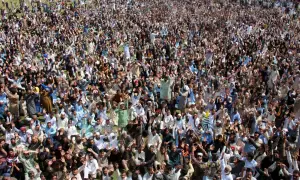
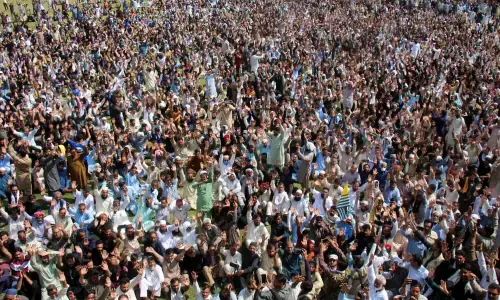
WITH elections due in Gilgit-Baltistan next month, this would be an opportune time for those who make decisions in Pakistan to study the northern region’s political situation, particularly the legitimate demands of its people. While the region opted for Pakistan soon after the partition of the subcontinent, successive governments in Islamabad have been very slow to grant full political rights to GB. Even today, while progress has been made, GB remains outside the political mainstream, with a hybrid system in place where the area’s elected representatives compete with powerful, unelected bureaucrats sitting in the federal capital to decide its fate. Moreover, when movements for rights gather steam, these are quickly subdued with often harsh penalties imposed on political leaders. Take the case of Baba Jan. The Hunza-based activist was handed down a 71-year sentence by an antiterrorism court for raising a voice for victims of the Attabad Lake incident. Hundreds of people held a protest in Aliabad, Hunza, on Monday demanding justice for Baba Jan and 13 others who have been in jail since 2011. The protesters slammed the application of terrorism charges against the activists, and called for the release of all political prisoners.
Instead of clamping down on all those who demand their rights and terming them ‘anti-state’, the rulers need to deal with the issues that confront GB in a democratic manner. Using heavy-handed tactics will only add to the discontent that is bubbling in the region. For example, when Baba Jan contested local elections while imprisoned, he managed to bag the second-highest number of votes. Before the situation in the region deteriorates, the state must address the people’s genuine concerns with empathy and in a manner that gives them ownership of the political process. For instance, the elected Gilgit-Baltistan Legislative Assembly must have more powers. Moreover, the centre must give serious thought, though keeping possible drawbacks in mind, to the plan to give the region provisional provincial status, and thus representation in the National Assembly and Senate; waiting endlessly for the resolution of the Kashmir dispute — to which GB is historically linked — is unfair in the eyes of GB residents. GB has a young, educated population aware of its rights. Denying them the space to express their rights, and using failed methods to suppress opinions diverging from the official line should be shunned. Instead, an attitude of accommodation and dialogue must be adopted by the state in GB.
Published in Dawn, October 8th, 2020