Greenland ice sheet sheds 532bn tonnes


 1
1
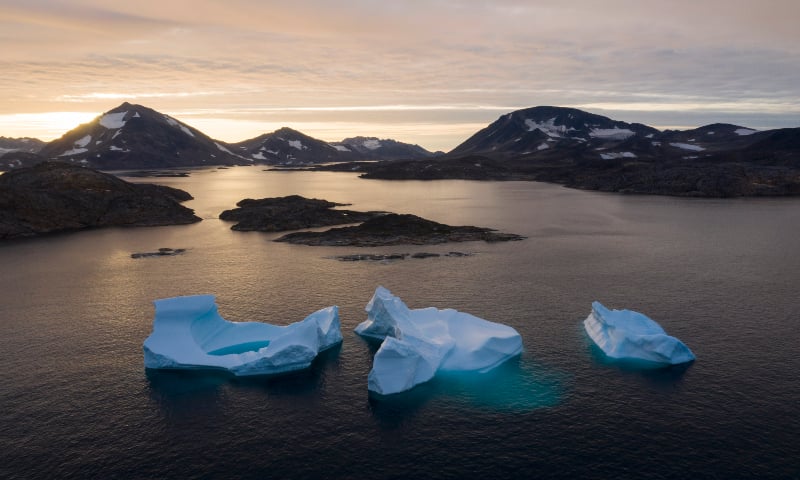
PARIS: Greenland’s massive ice sheet saw a record net loss of 532 billion tonnes last year, raising red flags about accelerating sea level rise, according to findings released on Thursday.
That is equivalent to an additional three million tonnes of water streaming into global oceans every day, or six Olympic pools every second.
Crumbling glaciers and torrents of melt-water slicing through Greenland’s two-to-three-kilometre thick ice block were the single biggest source of global sea level rise in 2019, accounted for 40 percent of the total, or 1.5 millimetres, researchers reported in the journal Communications Earth & Environment.
Last year’s loss of mass was at least 15 percent above the previous record in 2012, but even more alarming are the long-term trends, they said.
“2019 and the four other record-loss years have all occurred in the last decade,” lead author Ingo Sasgen, a glaciologist at the Helmholtze Centre for Polar and Marine Research in Germany, said.
If all of Greenland’s ice sheet were to melt, it would lift global oceans by seven metres.
Even a more modest rise of a couple of metres would redraw the world’s coastlines and render land occupied today by hundreds of millions of people uninhabitable.
Until 2000, Greenland’s ice sheet -- covering an area three times the size of France -- generally accumulated as much mass as it shed.
Runoff, in other words, was compensated by fresh snowfall.
But over the last two decades, the gathering pace of global warming has upended this balance.
The gap is widening at both ends, according to the study, which draws from nearly 20 years of satellite data.
Changing weather patterns — also a consequence of climate change — has resulted in less cloud cover, and thus less snow. These high pressure systems have also resulted in more, and warmer, sunny days, accelerating the loss of mass.
Published in Dawn, August 21st, 2020