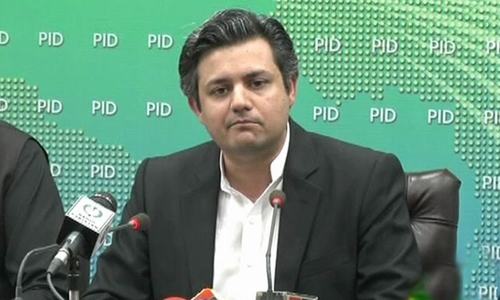
PM, aides reiterate 'coronavirus situation not bad' in Pakistan

Prime Minister Imran Khan on Thursday said that the death rate in the country from the coronavirus was "lower than feared".
Addressing a news briefing along with his aides in Islamabad, the premier added that he had "thought that our intensive care units (ICUs) would be filled by now but that is not the case".
Echoing his words, the Minister for Planning, Development and Special Initiatives Asad Umar assured that the country's coronavirus situation is "not out of control".
He added that Pakistan's trend was different from European countries so the country was doing its own modelling. "It is true that we have a big number of cases and deaths. The number of deaths will increase in the coming days but our situation is not as bad as other countries," he said.
Read: Covid-19 and Pakistan's data narrative

He added that easing of the lockdown after May 9 depended on whether people were following the restrictions and social distancing measures. "I urge you all to cooperate with the government [in following preventive measures] even more stringently than before."
Dr Faisal Sultan, the prime minister's focal person on coronavirus also assured the nation that the situation was "not as bad as in Europe or the United States". He added that the government analysed global and local coronavirus trends before taking decisions.
Comparing Pakistan's situation to neighbouring Iran which has been badly affected by the virus, Special Assistant to the Prime Minister on Health Dr Zafar Mirza said that Pakistan was "comparatively better off".
Mirza said the government was "worried about medical workers" and would soon launch a programme for protection of medical staff working on the front lines of the coronavirus pandemic.
The SAPM said that the country was now producing its own personal protective equipment (PPE) but it had been observed that PPE was "not being used rationally" in some places. "We will train medics on the proper use of PPE."
He added that the government would also provide psychological support to those working on the front lines.
Govt to quadruple donations
The prime minister said that the government will contribute Rs4 for every Rs1 that people donate to the premier's corona relief fund.
He added that the fund would be used to help those who have lost their jobs because of the lockdowns enforced to contain the spread of the virus.
Minister for Industries and Production Hammad Azhar said that the government would merge the relief fund with the Ehsaas programme to help labourers and daily-wagers who have been affected by the lockdowns.
While detailing plans to help small businesses during the coronavirus, Azhar said that their utility bills for three months would be paid by the government. An estimated 350,000 small businesses would benefit from the programme, he added.
Adviser to the premier on social protection and poverty alleviation Sania Nishtar said that all those who have registered for the Ehsaas cash disbursement programme would receive a message within the next 10 days. She urged people not to visit the distribution centres until they received a message from 8171 so as not to create rush in violation of social distancing guidelines.
She assured them that the government was working to resolve all problems that people were facing in collecting their amounts.
The prime minister concluded by urging people to stay at home and observe social distancing when they went to mosques. "This is a difficult time for our nation. If you don't maintain social distancing and don't follow preventive measures, we will all suffer," he said.