Business, transport suspended in India during 14-hour lockdown for coronavirus



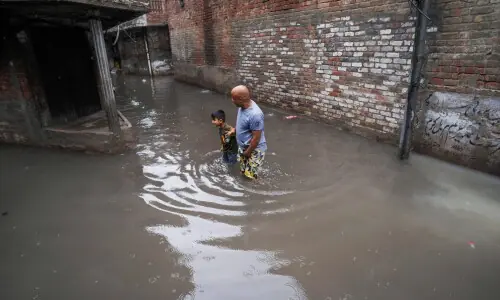
Hundreds of millions of Indians stayed indoors on Sunday, heeding Prime Minister Narendra Modi’s appeal to citizens to self-isolate as authorities battled to contain the fast-spreading coronavirus epidemic.
At least 341 people have so far contracted the disease and four deaths have been reported in India due to the coronavirus, according to official data on Sunday.
While the curfew was voluntary and not an outright ban on the movement of people, Modi’s national appeal for social distancing dramatically reduced the number of people taking to India’s densely crowded streets.

Indian Railways, which carries more than 25 million commuters every day, said it has canceled all passenger train services until March 31.
Firefighters in western India fumigated areas around closed markets, public squares and urban slum districts.
Experts have warned that the country’s cases are growing at rates seen during the early stages of the outbreak in other countries, which subsequently reported exponential increases in infections.
With over 1.3 billion people, India is trying to battle a pandemic with limited resources.
Minutes before the self-imposed curfew kicked in, Modi said the curbs would help authorities better fight the Covid-19 menace.
“The steps we take now will help in the times to come,” he said in the tweet.
While the curfew will be relaxed by Sunday evening, authorities have declared lockdowns in many cities and suspended several rail and road transport services as fears of community transmission of the virus grew across India.

“The curfew period has given us a chance to scale down each and every activity across India,” said a senior aide to Modi, adding that a more rigid approach could trigger protests or unrest.
“A breakdown of law and order will be the worst thing to happen at this point of time,” he said, while speaking on condition of anonymity.
In India’s financial capital, Mumbai, where millions of people depend on urban rail systems, only workers involved in essential services were allowed to travel on truncated services.
Factories, large industrial parks and banks were declaring a shutdown or finding ways to minimise public movement in offices.
Vegetable vendors and small tea shop owners were quietly closed down by local police and truck drivers were given free masks and sanitisers at check points on inter-state highways.
State leaders urged citizens not to rush to villages to prevent the virus spread but tensions have mounted as angry labourers protested at some bus stations against sudden closures of basic transport services.
Read: Poor Indians flee to villages as coronavirus measures take heavy toll
Private events, such as weddings, and local elections were canceled. The federal government was accelerating the production of masks and has allowed deodorant manufacturers to produce sanitisers.

Modi has requested citizens to stand at balconies and near windows on Sunday evening to clap and ring bells to praise emergency personnel and sanitation workers who are on the frontlines in the fight against coronavirus.
India has canceled most entry visas for people flying in from other countries.
Facebook Inc’s WhatsApp launched a helpline number to ensure circulation of accurate information after India’s technology ministry asked it to ramp up vigilance to prevent spread of misinformation about the virus outbreak.
With 400 million users, India is WhatsApp messenger’s biggest market.