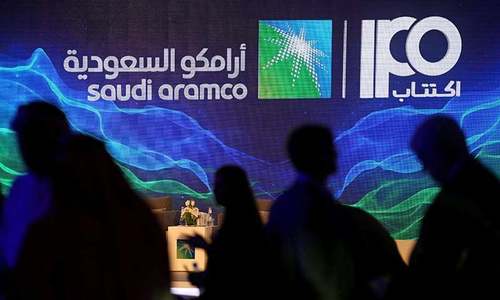
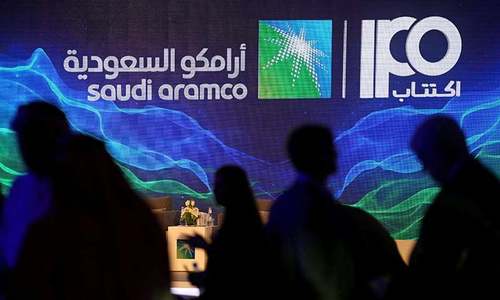
Aramco prices shares at top of range in world’s biggest IPO



DUBAI: State-owned oil giant Saudi Aramco’s initial public offering (IPO) will be the biggest in history, but will still fall significantly short of the towering $2 trillion valuation long sought by Crown Prince Mohammed bin Salman.
Aramco priced its IPO at 32 riyals ($8.53) per share, the top of its indicative range, according to three sources familiar with the decision, raising $25.6 billion and beating Alibaba’s record $25bn listing in 2014.
At that level, Aramco has a market valuation of $1.7tr, comfortably overtaking Apple as the world’s most valuable listed firm. But the listing, expected later this month on the Riyadh stock exchange, is a far cry from the blockbuster debut originally envisaged by the Crown Prince.
Saudi Arabia relied on domestic and regional investors to sell a 1.5 per cent stake after lukewarm interest from abroad, even at the reduced valuation of $1.7tr.
Sources told Reuters earlier that Aramco may also exercise a 15pc “greenshoe” option, allowing it to increase the size of the deal to a maximum of $29.4bn.
Riyadh has gone quiet on when or where Aramco could list abroad
Aramco has declined to comment on the IPO pricing. A formal announcement is expected later on Thursday, the sources said.
The pricing comes as the Organisation of the Petroleum Exporting Countries is gearing up to deepen oil supply cuts to support prices, provided it can strike a deal later this week with allies such as Russia.
Climate change concerns, political risk and a lack of corporate transparency put foreign investors off the offering, forcing the kingdom to ditch ambitions to raise as much as $100bn via an international and domestic listing of a 5pc stake.
Even at a $1.7tr valuation, international institutions baulked, prompting Aramco to scrap roadshows in New York and London and focus instead on marketing a 1.5pc stake to Saudi investors and wealthy Gulf Arab allies. Saudi banks offered citizens cheap credit to bid for shares.
Riyadh has gone quiet on when or where Aramco could list abroad.
The IPO is the culmination of a years-long effort to sell a portion of the world’s most profitable company and raise funds to help diversify the kingdom away from oil and create jobs for a growing population.
Published in Dawn, December 6th, 2019